Simply put:
• A successful patio paver installation depends on proper base preparation, correct paver selection for Ohio’s freeze-thaw climate, and accurate drainage planning.
• Most residential paver patios take a few days to a few weeks to complete depending on size and design complexity.
• Working with an experienced local contractor reduces the risk of settling, cracking, or drainage problems after installation.
A flawless paver patio starts below the surface, not on top of it. Proper excavation depth, compacted base material, and drainage slope determine whether a patio stays level and stable for decades or begins shifting within a few seasons.
Homeowners in Columbus, OH researching Patio Paver Installation are often surprised by how much planning happens before the first paver is ever set. Soil type, frost depth, and the intended use of the space (seating area, fire pit, outdoor kitchen) all influence the design choices a contractor makes during the estimating phase.
Planning the Layout and Paver Selection
A well-planned layout balances square footage, traffic flow, and how the patio connects to the house and yard. Paver material and pattern selection also affect long-term durability and maintenance.
• Concrete pavers: widely used for residential patios, available in many colors and shapes, and relatively budget-friendly.
• Natural stone pavers: higher upfront cost, distinct texture, and strong resale appeal.
• Permeable interlocking pavers: designed with small joints that allow water to pass through the surface rather than pooling on top.
Pattern choice (herringbone, running bond, basketweave) is not purely aesthetic. Certain patterns distribute weight more evenly, which matters for driveways or patios that will support heavy furniture, hot tubs, or frequent foot traffic.
Base Preparation and Drainage Planning
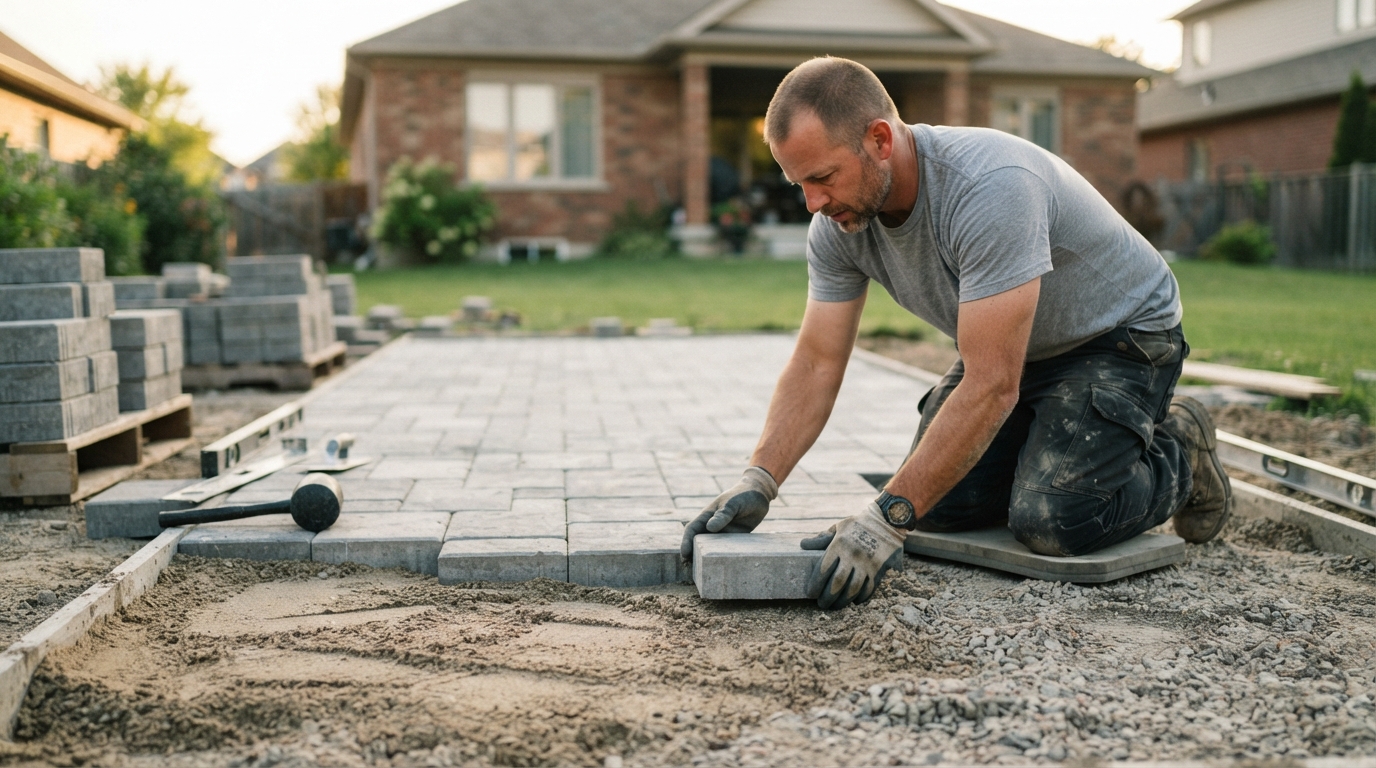
Base preparation is the single biggest factor separating a patio that lasts for decades from one that heaves and cracks within a few years. A typical installation sequence includes:
1. Excavating to the correct depth based on soil conditions and expected load.
2. Installing and compacting a gravel base layer in lifts to prevent future settling.
3. Adding a leveling layer of coarse sand before paver placement.
4. Setting pavers with consistent joint spacing and sweeping in polymeric or joint sand.
5. Compacting the finished surface to lock pavers into place.
Drainage slope is typically built into the base so water moves away from the home’s foundation rather than pooling on the patio surface. For permeable paver systems, permeable pavements allow stormwater to infiltrate through the surface and through small openings between pavers that contain highly permeable jointing material, which can reduce runoff in yards with poor natural drainage. According to EPA guidance on permeable pavements, alternatives to traditional pavement can help reduce runoff by infiltrating rain water and melting snow, which is a relevant consideration for Columbus, OH properties dealing with heavy spring rainfall.
Patio Paver Materials Compared
| Material | Average Lifespan | Maintenance Level | Best Use Case |
| Concrete pavers | 25-30 years | Low to moderate | General patios, walkways |
| Natural stone | 30+ years | Moderate | High-end patios, pool surrounds |
| Permeable pavers | 20-25 years | Moderate (joint refill) | Drainage-challenged yards |
| Poured concrete | 20-25 years | Low | Budget-conscious projects |
Seasonal Timing and Installation Considerations
Ohio’s freeze-thaw cycles make timing and base depth especially important for long-term stability. Pavers installed without adequate base depth are more likely to shift when the ground freezes and thaws repeatedly through winter and early spring.
• Spring and fall generally offer the most workable soil conditions for excavation and compaction.
• Summer installations are common but may require extra attention to curing times for polymeric sand in high heat.
• Winter installation is possible in many cases, though frozen ground can slow excavation and compaction work.
Property owners near Powell, OH and throughout the surrounding region often schedule installations in early spring or fall to avoid peak-season scheduling delays and take advantage of more predictable weather for curing and compaction.
How long does a typical paver patio installation take? Installation timelines vary based on patio size, pattern complexity, and site conditions, but most residential projects are completed within a few days to a few weeks.
Can pavers be installed during Ohio winters? Installation is possible in winter months when weather permits, though frozen or saturated soil can extend excavation and compaction timelines.
What is the biggest cause of paver patio failure? Inadequate base preparation, including insufficient excavation depth or poor compaction, is the most common reason patios settle, crack, or heave over time.
Do permeable pavers require special maintenance? Permeable paver joints need periodic cleaning or refilling to maintain infiltration rates, since sediment and debris can reduce how well water passes through the surface over time.
Business Information and Next Steps
Based in Powell, OH, the company serves customers across Columbus, OH.
Current project examples and service area details for Click here for patio installations are published for homeowners researching local paver options.