Summary:
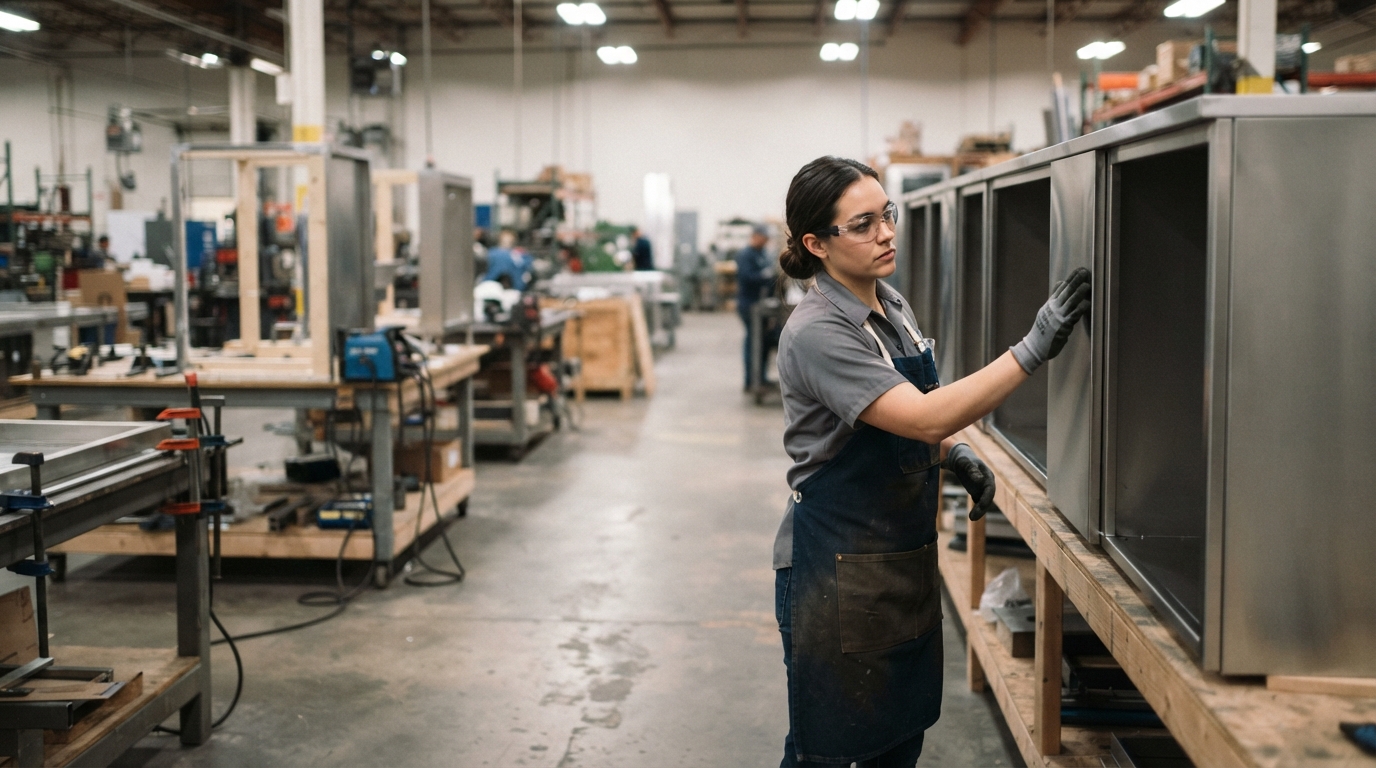
- Laboratory casework manufacturers are evaluated on material durability, chemical resistance, and the ability to produce steel, wood, or laminate casework to project specifications.
- Key decision factors include compliance with safety standards, modular or fixed configuration options, and manufacturing capacity located in the USA.
- Buyers should compare fume hood integration, worksurface materials, and after-installation support before selecting a supplier.
Choosing the right supplier among laboratory casework manufacturers depends on verifying material quality, safety compliance, and manufacturing capacity before a project begins. Laboratories that skip this evaluation often face delays, poor chemical resistance, or casework that does not match the intended workflow.
Facilities searching for Laboratory Casework Manufacturers typically need more than a vendor that sells cabinets. The casework forms the structural backbone of a lab, housing chemicals, equipment, and samples while supporting ventilation and plumbing systems that keep a space compliant with safety codes.
Core Materials and Construction Standards
Casework is generally produced in steel, wood, or laminate, and each material serves different lab environments.
- Steel casework resists corrosion and is suited to chemical-heavy settings such as industrial or pharmaceutical labs.
- Wood casework is common in education and research spaces where aesthetics and durability both matter.
- Laminate casework offers a cost-conscious option for healthcare and general lab functions.
Manufacturers that produce steel and wood casework and laboratory cabinetry, fume hoods, adaptable modular and flexible systems, movable workstations, stand-alone and work benches give buyers flexibility to match materials to the specific chemical and workload demands of a facility. Products made from materials resistant to chemicals and corrosive substances help prevent degradation and reduce the risk of spills or leaks causing damage.
Safety Compliance and Fume Hood Integration
Casework cannot be evaluated separately from the ventilation and containment systems that operate alongside it. Fume hoods, which are often sold as part of a casework system, play a direct role in capturing and removing harmful vapors, gases, and particles generated during lab work.
Facilities handling hazardous materials should confirm that a manufacturer builds casework and fume hoods as an integrated system rather than mismatched components. The Occupational Safety and Health Administration maintains laboratory safety standards that guide ventilation, storage, and chemical handling requirements relevant to casework selection.
Look for these compliance indicators during vendor review:
- Documented chemical resistance testing for worksurfaces and cabinet interiors.
- Ventilation compatibility between casework layout and fume hood placement.
- Storage configurations, such as shelves, drawers, and specialized compartments, designed for safe chemical and sample handling.
Manufacturing Capacity and Domestic Production
Where and how casework is manufactured affects lead times, customization options, and quality control. Buyers should confirm whether a manufacturer operates domestic production facilities or relies primarily on imported components, since domestic manufacturing in the USA often supports faster turnaround and more direct oversight of fabrication standards.
| Factor | Why It Matters |
|---|---|
| Material options (steel, wood, laminate) | Matches casework to chemical exposure and budget |
| Fume hood integration | Supports ventilation compliance in hazardous labs |
| Domestic manufacturing | Affects lead time and quality control |
| Modular vs. fixed systems | Allows labs to adapt layouts as needs change |
Modular and adaptable casework systems also matter for labs expecting to reconfigure space over time, since fixed installations are harder to adjust once a facility’s research focus shifts.
Frequently Asked Questions
What is the difference between steel and wood laboratory casework? Steel casework offers stronger corrosion resistance for chemical-intensive environments, while wood casework is often selected for research and education labs where durability and finish quality both matter.
Why does fume hood integration matter when selecting casework? Fume hoods and casework often function as a connected system, and proper integration helps capture and remove harmful vapors, gases, and particles generated during lab work.
Does it matter if casework is manufactured in the USA? Domestic manufacturing in the USA can reduce lead times and allow closer coordination on custom specifications compared to casework sourced entirely overseas.
Business Info
Kewaunee Scientific – Manufacturing HQ is a laboratory furniture manufacturer with production operations in the USA, producing steel, wood, and laminate casework alongside fume hoods and related laboratory infrastructure.
Additional facility details for Kewaunee Scientific – Manufacturing HQ are published for review when comparing laboratory casework manufacturers.