Snapshot:
- A farmland auction sells tillable or recreational acreage through competitive bidding, often with earnest money due the same day and no financing contingency.
- Registration, title review, and terms of sale are typically finalized before bidding opens, not during the event.
- Buyers in Mankato, MN should confirm closing timelines and tax responsibilities before placing a bid.
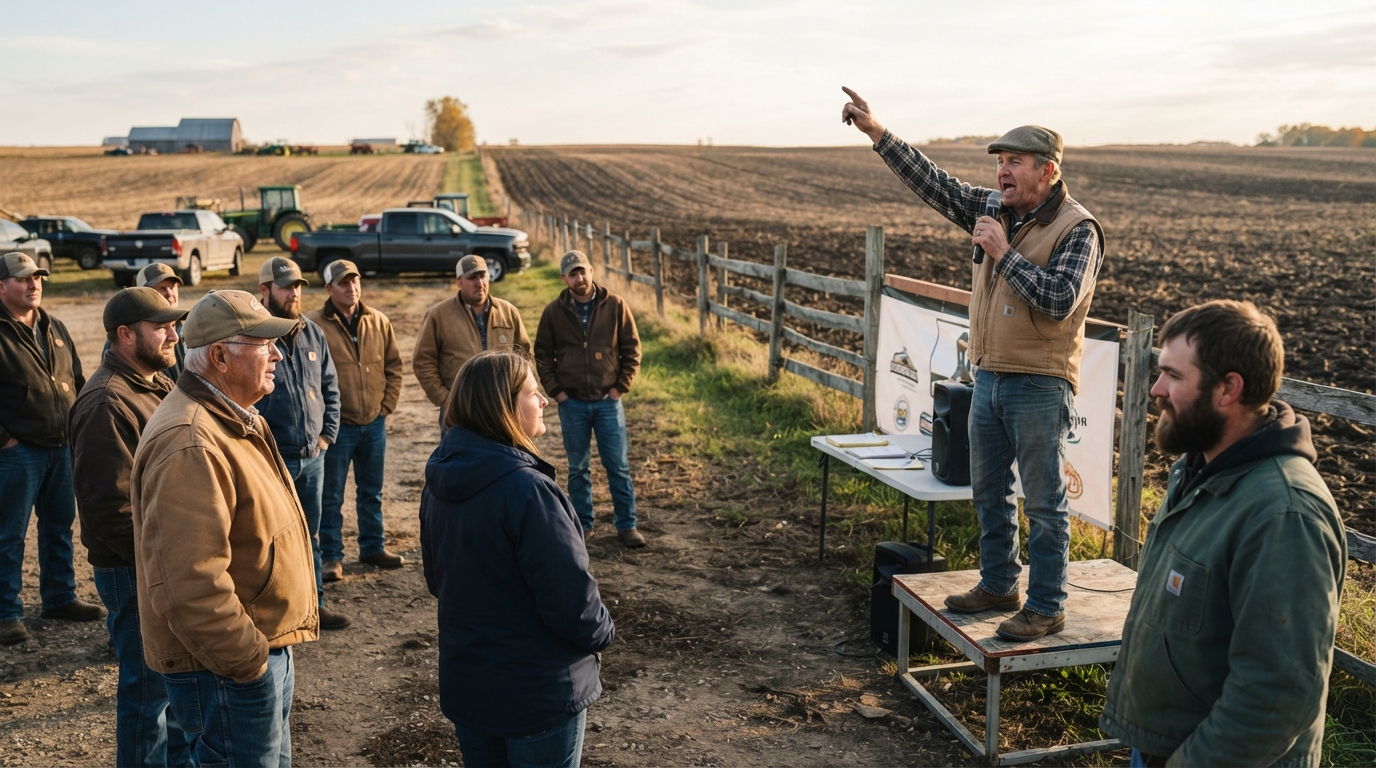
A farmland auction is a public sale method where tracts of agricultural land are sold to the highest bidder, usually through a live, online, or hybrid bidding format set by an auctioneer or brokerage. The process favors prepared buyers who have reviewed property details and financing in advance, since most sales close within weeks and carry no contingency for loan approval.
Understanding a Farmland Auction in Mankato, MN means knowing what happens before, during, and after the bidding closes. Properties are typically marketed with acreage figures, tillable percentages, and legal descriptions weeks ahead of the sale date, giving prospective buyers time to inspect the land and arrange funding.
How the Bidding Process Works
Most farmland auctions follow a few consistent stages regardless of venue.
- Registration: Bidders provide identification and sometimes proof of funds before receiving a bid number.
- Terms announcement: The auctioneer reads sale terms, including earnest money percentage, closing date, and any easements or restrictions tied to the parcel.
- Active bidding: Rounds continue until bidding slows, often with a short pause near the high range to let bidders confirm their final numbers.
- Declaration of sale: The high bidder signs a purchase agreement and submits earnest money, frequently the same day.
Auction formats vary by seller and region. Live in-person events remain common for Minnesota farmland, though online-only and hybrid formats that combine in-person attendance with internet bidding have become widely used for recent tracts across the state.
Financial and Legal Considerations Before Bidding
Buyers should treat the pre-auction period as the most important part of the transaction.
- Review the purchase agreement and terms of sale in advance, since auction contracts are typically written to favor the seller and allow little negotiation after the gavel falls.
- Confirm earnest money requirements, which are commonly due on auction day and can range based on the total sale price.
- Verify financing readiness before bidding, since most farmland auctions carry no financing contingency and require closing within a set number of weeks.
- Check recent per-acre sale data for the surrounding county to judge whether a bid aligns with current market conditions, using resources such as the University of Minnesota Extension farmland sale prices database.
Readers in Mankato, MN evaluating a nearby tract should also confirm how real estate taxes for the current year will be prorated, since sellers and buyers often split or assign this responsibility differently depending on the listing terms.
Auction Formats Compared
| Format | Bidding Method | Typical Buyer Presence | Common Use Case |
| Live in-person | Open outcry, rounds led by auctioneer | On-site attendance required | Traditional single-tract or multi-tract sales |
| Online-only | Timed bidding through a web platform | Remote, no travel needed | Tracts marketed to a wider buyer pool |
| Hybrid | Combines in-person and online bidding | Either on-site or remote | Sales seeking maximum bidder participation |
Each format carries the same core obligations around earnest money and closing timelines, though online and hybrid sales may extend bidding windows over several days rather than concluding in a single session.
Frequently Asked Questions
Is financing allowed to be a contingency in a farmland auction? Rarely. Most farmland auction terms specify that bidding is not contingent on financing or buyer inspection, which places the responsibility on bidders to arrange funds beforehand.
How soon is earnest money due after winning a bid? Earnest money is commonly collected the same day as the auction, with the balance due at closing, which often falls within a few weeks of the sale date.
Can a buyer inspect the property before the auction date? Yes. Sellers and auctioneers typically encourage prospective bidders to walk the property and review soil or tillable-acre data before the sale, since bids are generally final once accepted.
Do auction terms differ between tracts sold individually versus in groups? They can. Some sales use a “choice” method allowing the top bidder to select one or multiple tracts, which affects how subsequent rounds of bidding proceed.
Final Notes on the Auction Process
Based in USA, True Land serves customers across Mankato, MN.
Current terms and property details for an upcoming sale are outlined where Read more about farmland auctions is published for review before bidding begins.