Summary:
- Carbonating tap water at home with a reusable bottle cuts down on single-use plastic bottle purchases and storage.
- A countertop soda maker lets users control fizz strength and flavor without added sugar or preservatives.
- Home carbonation systems typically use refillable CO2 cylinders, reducing the number of disposable containers entering the waste stream.
Homemade sparkling water answers a simple question: is it worth skipping store-bought seltzer for a countertop machine? For households that drink carbonated water regularly, the answer usually comes down to cost per serving, control over ingredients, and less reliance on single-use plastic.
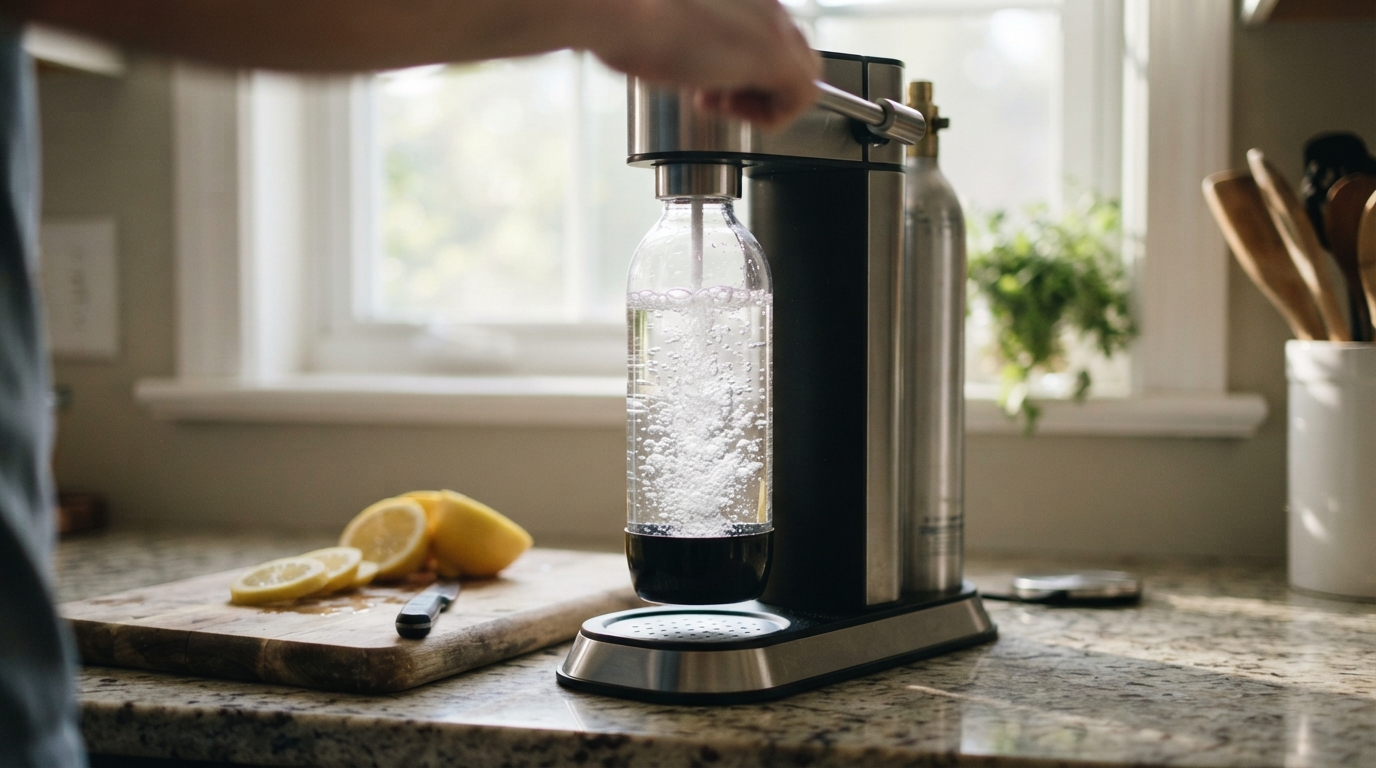
A Drinkmate soda maker works by injecting food-grade CO2 directly into a bottle of liquid through a pressurized lid, carbonating water or other beverages without electricity. The process relies on a reusable bottle and a refillable CO2 cylinder, which is the mechanism behind most of the practical benefits described below.
Why Home Carbonation Appeals to Everyday Households
Sparkling water consumption has grown steadily, and many consumers now weigh the convenience of grab-and-go cans against the cost of making it at home. Three factors tend to drive the decision:
- Cost per serving. A single reusable bottle paired with a refillable CO2 cylinder can produce many liters of sparkling water before the cylinder needs a refill.
- Ingredient control. Carbonating plain tap or filtered water avoids the added sugars, sodium, or preservatives found in some bottled or canned options.
- Convenience. Having a soda maker on the counter removes the need to keep large packs of bottled water on hand or make frequent store runs.
Reducing Single-Use Plastic at the Tap
Plastic waste reduction is one of the most frequently cited reasons people switch to home carbonation. According to industry recycling data, the plastic bottle recycling rate for PET bottles in the US is around 30%, meaning most bottles produced still end up in landfills or as litter rather than being recycled. A home carbonation system that reuses the same bottle repeatedly sidesteps that disposal problem for the water portion of a household’s beverage consumption.
Refillable CO2 cylinders compound this benefit. Rather than disposing of a bottle after every use, a cylinder is exchanged or refilled once it runs low, which means fewer containers purchased, transported, and discarded over time. Readers interested in broader context on plastic packaging and recycling infrastructure can review the EPA’s facts and figures on materials and waste, which tracks national container recycling trends.
Comparing Store-Bought and Home-Carbonated Options
| Factor | Store-Bought Sparkling Water | Home Carbonation System |
|---|---|---|
| Packaging waste | New bottle or can per serving | Single reusable bottle, refillable CO2 |
| Flavor customization | Fixed flavors per product | Adjustable carbonation level and flavor add-ins |
| Shopping frequency | Regular store trips or deliveries | Refill cylinder only when depleted |
| Ingredient transparency | Label-dependent | Starts with the water or beverage on hand |
This comparison is most relevant for households that already drink multiple bottles or cans of sparkling water per week, since the savings and waste reduction scale with frequency of use.
Practical Considerations Before Switching
Home carbonation is not a universal fit for every kitchen or budget. A few practical points are worth weighing:
- Upfront cost. A soda maker and starter CO2 cylinder represent an initial purchase before any per-glass savings begin.
- Counter space. Most machines are designed for compact countertop placement, but kitchen layout still matters.
- Carbonation learning curve. Getting the right fizz level typically takes a few attempts, since more pumps produce stronger carbonation.
- Cylinder exchange logistics. Refill or exchange programs vary by brand, so checking how and where cylinders can be swapped matters for ongoing convenience.
Across the USA, interest in reducing single-use plastic at the household level continues to support demand for refillable, countertop carbonation systems as an alternative to buying bottled or canned sparkling water.
Frequently Asked Questions
Does home-carbonated water taste different from store-bought sparkling water? Carbonation strength can be adjusted by the user, so the fizz level and mouthfeel can be made lighter or stronger than typical store-bought products, depending on personal preference.
Can a soda maker carbonate beverages other than water? Some machines are designed to carbonate juices or other drinks in addition to water, though manufacturer guidance on compatible liquids should be checked before use.
How often does the CO2 cylinder need to be replaced? This depends on how frequently the machine is used and the cylinder size, since more carbonation cycles draw down the CO2 supply faster.
Is a countertop soda maker difficult to set up? Most systems are designed for straightforward countertop setup without electrical wiring, typically involving attaching a cylinder and bottle according to the included instructions.
Final Thoughts and Next Steps
Making sparkling water at home offers a practical way to reduce reliance on single-use plastic bottles while keeping ingredient choices simple and transparent. Business location and service details are published through Visit Drinkmate, a profile that lists general contact and location information.
Readers evaluating a countertop carbonation setup can Visit Drinkmate for published location and contact details.