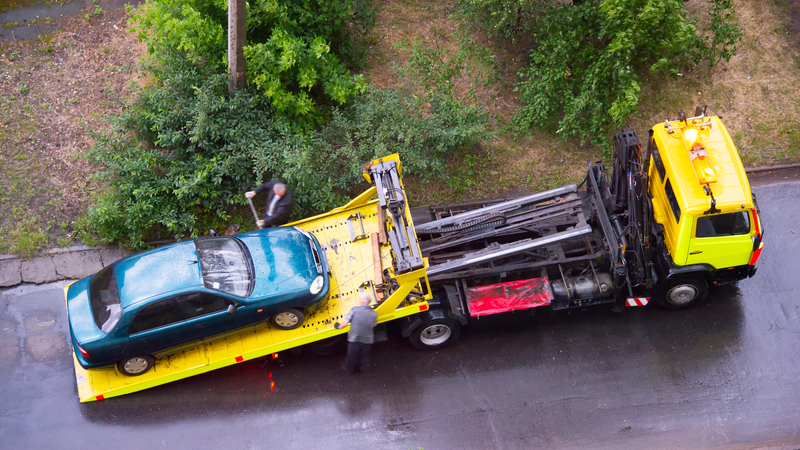
When a car breaks down on a freeway entrance ramp, the immediate priority is protecting the driver, passengers, and surrounding traffic. A disabled vehicle may need emergency towing if it cannot safely leave the ramp, while law enforcement or roadside responders may need to manage traffic before it can be removed.
Freeway entrance ramps present different risks from ordinary streets because vehicles accelerate, merge, and adjust their positions within a relatively confined roadway. A car that suddenly loses power can create an unexpected obstruction for approaching drivers.
For motorists traveling around Laveen, AZ, understanding what happens during a ramp breakdown can help them make safer decisions without attempting unnecessary roadside repairs.
Why Is a Breakdown on a Freeway Entrance Ramp Particularly Dangerous?
Entrance ramps connect local roads with higher-speed freeway traffic. Drivers approaching these areas are often concentrating on acceleration, merging gaps, and traffic entering from neighboring lanes.
A disabled vehicle interrupts that movement.
Unlike a parking lot or residential street, a freeway ramp may offer limited shoulder space. Curved approaches, barriers, and changes in elevation can also reduce how early approaching motorists notice a stopped vehicle.
Several conditions can make the situation more challenging:
- Limited visibility: A vehicle stopped beyond a curve may be difficult for approaching drivers to see.
- Traffic acceleration: Other motorists may be increasing their speed as they approach the freeway.
- Restricted shoulders: Some ramps provide little space for a disabled vehicle to stop outside the travel lane.
- Changing traffic patterns: Drivers may make sudden maneuvers when they encounter an unexpected obstruction.
- Limited access: Responders may have difficulty approaching the vehicle without additional traffic protection.
These conditions explain why a breakdown near an entrance ramp should be treated differently from a routine vehicle problem in a low-traffic location.
What Should Drivers Do Immediately After Their Vehicle Stops?
The appropriate response depends on whether the vehicle can still move, where it stops, and whether anyone faces immediate danger.
The Arizona Department of Public Safety advises motorists experiencing highway breakdowns to notify 911 and move completely off the roadway when possible.
That guidance is especially relevant when a disabled vehicle obstructs an entrance ramp.
Move Away From Traffic Only When Safe
If the vehicle is still operating well enough to move safely, the driver may be able to reach a suitable shoulder or another location away from moving traffic.
However, drivers should not attempt to force a severely malfunctioning vehicle through traffic.
If the engine stops completely, the steering becomes difficult to control, or another serious problem develops, the safest available response may be to stop and request assistance.
A driver should never cross active traffic lanes or make an unsafe maneuver merely to reach a preferred stopping location.
Activate Hazard Warning Lights
Hazard lights can help approaching motorists recognize that a vehicle is stopped unexpectedly.
They are particularly useful when a disabled car remains near the path of traffic.
However, flashing lights do not make a hazardous location safe. They are a warning measure, not a substitute for keeping people away from moving vehicles or obtaining emergency assistance.
Contact Emergency Services
When a breakdown occurs on a freeway entrance ramp, calling 911 allows emergency personnel to assess whether the situation requires traffic management or another immediate response.
Drivers should provide their location, explain whether the vehicle is blocking a lane, and report any injuries or immediate hazards.
A towing provider can then assist with vehicle removal when the location is accessible and the necessary safety arrangements are in place.
Should You Stay Inside the Vehicle or Get Out?
There is no single answer that applies to every freeway-ramp breakdown.
If the vehicle is positioned beside fast-moving traffic, exiting into an active lane can expose occupants to serious danger. Walking along a freeway or attempting to cross traffic is also hazardous.
Arizona highway safety guidance generally discourages motorists from walking along freeways after a breakdown.
However, remaining inside a vehicle may be inappropriate if there is smoke, fire, another immediate danger, or an unsafe interior temperature.
Drivers should assess the conditions and follow instructions from emergency responders.
What if the Vehicle Is Blocking the Ramp?
When a vehicle cannot leave an active traffic lane, the situation requires prompt attention.
The driver should notify 911, describe the obstruction, and avoid attempting to direct traffic personally.
Passengers should not stand behind the disabled car or attempt to push it while other vehicles approach.
Emergency personnel may need to protect the area before roadside towing can begin.
The priority is preventing additional incidents, not simply removing the vehicle as quickly as possible.
What Vehicle Problems Can Cause a Breakdown During Freeway Entry?
A vehicle may become disabled while entering a freeway for several reasons. Some problems develop suddenly, while others become noticeable as the driver accelerates.
Understanding the possible circumstances can help motorists communicate useful information to responders without trying to diagnose the problem themselves.
Engine Power Loss
An engine may lose power because of a mechanical, electrical, or fuel-related problem.
A vehicle that cannot accelerate normally may be unable to merge safely into freeway traffic.
If the car stalls or struggles to maintain movement, drivers should avoid repeatedly attempting to enter a high-speed lane.
Tire or Wheel Problems
Sudden tire damage or severe vibration can make continued driving unsafe.
A driver may notice abnormal handling, unusual noise, or a loss of control before reaching the freeway.
Even when a damaged vehicle can move slowly, that does not mean it should continue onto a busy roadway.
Overheating or Cooling-System Problems
A vehicle may begin overheating while accelerating or traveling under demanding conditions.
Visible steam, temperature warnings, or signs of coolant loss can indicate a problem requiring professional attention.
Continuing to operate an overheating engine may worsen the damage.
Electrical or Starting-System Problems
Electrical faults can also leave a vehicle unexpectedly disabled.
Although some issues may be resolved through roadside assistance, others require further diagnosis at an appropriate repair facility.
The type of assistance depends on the vehicle’s condition and the safety of the location.
When Is Emergency Towing Necessary?
Emergency towing becomes relevant when the vehicle cannot be operated safely, cannot be moved out of traffic under its own power, or requires transportation for further inspection.
The decision should be based on the vehicle’s condition and the surrounding environment rather than the inconvenience of the breakdown alone.
For example, a vehicle experiencing severe power loss near a freeway entrance may be unsuitable for continued driving even if the engine occasionally restarts.
Likewise, a car damaged during a collision may require transportation rather than another attempt to enter traffic.
Motorists seeking Emergency towing in Laveen should communicate the vehicle’s exact position and whether emergency personnel are already assisting at the scene.
That information can help the towing provider determine how the request should be handled.
How Is a Vehicle Removed From a Freeway Entrance Ramp?
Removing a disabled vehicle from a ramp involves more than connecting it to towing equipment.
The surrounding traffic, vehicle position, available stopping space, and mechanical condition all affect how the situation should be approached.
Assessing Roadway Access
A towing operator must determine whether the vehicle can be approached without creating an additional hazard.
If the car is stopped in a travel lane, law enforcement or other authorized responders may need to establish appropriate traffic protection.
Towing personnel should not be expected to work in an unprotected traffic lane simply because the vehicle needs immediate removal.
Identifying the Vehicle’s Condition
The towing provider also needs to understand whether the car can roll normally, whether it sustained damage, and whether there are restrictions affecting its movement.
This information influences the equipment and handling required.
A vehicle with a mechanical breakdown may present different transportation needs from one involved in a collision.
Selecting an Appropriate Destination
Once removal is possible, the vehicle may need transportation to a repair shop, another authorized facility, or a destination arranged by the owner.
The destination should be established before transport whenever practical.
If law enforcement directs the vehicle’s removal because of an immediate roadway hazard, applicable scene-management instructions may affect the arrangements.
Does 24/7 Towing Mean a Tow Truck Can Immediately Enter Any Ramp?
Around-the-clock towing availability and immediate access to a hazardous roadway are not the same thing.
A company advertising 24/7 towing may accept assistance requests outside normal business hours, but actual response arrangements depend on location, dispatch availability, traffic conditions, and site safety.
An entrance ramp with a disabled vehicle may require coordination with law enforcement before a towing operator can approach.
Heavy traffic, an active collision investigation, or a temporary roadway restriction can also affect access.
Drivers should provide accurate details instead of assuming that a tow truck can safely stop anywhere along a freeway.
An appropriate response involves understanding both the vehicle’s needs and the conditions at the scene.
What Information Helps Roadside Responders Find the Vehicle?
A freeway entrance ramp can be difficult to identify accurately, especially when several nearby ramps connect to the same highway.
Drivers may describe their location using a neighborhood name, but responders often need more specific information.
Useful details include:
- Freeway name: Identify the highway the vehicle was attempting to enter.
- Direction of travel: Explain whether the ramp leads eastbound, westbound, northbound, or southbound.
- Nearest cross street: Provide the road associated with the entrance.
- Vehicle position: State whether the car is on the shoulder, in a travel lane, or near the merging area.
- Vehicle description: Share the color, make, and model.
- Visible hazards: Mention smoke, leaking fluids, collision damage, or other immediate concerns.
- Occupants: Report whether anyone is injured or requires assistance.
A phone’s map application may help identify the location, but drivers should use it only when doing so does not compromise safety.
Clear information can reduce confusion when emergency personnel and a towing provider are trying to reach the same location.
How Does Emergency Roadside Service Differ From Vehicle Transportation?
Not every roadside problem requires the vehicle to be transported.
Some issues, such as a discharged battery or certain tire-related problems, may be suitable for roadside assistance when the vehicle is in a location where the service can be performed safely.
However, a freeway entrance ramp may not provide an appropriate working area.
Even a problem that could normally be addressed in a parking lot may require a different response when the vehicle is exposed to moving traffic.
Emergency roadside service should therefore be evaluated in the context of the location, not only the mechanical problem.
If repairs or assistance cannot be performed safely, transporting the car to another location may be the more appropriate option.
What Should Laveen Drivers Consider During Extreme Heat?
A breakdown in the Phoenix area can introduce another concern: exposure to high temperatures.
During hot weather, an inoperable vehicle may lose air conditioning, making conditions uncomfortable or dangerous for passengers.
Young children, older adults, pets, and people with certain medical vulnerabilities may be particularly affected by heat exposure.
Drivers should inform emergency personnel if anyone is experiencing symptoms of heat-related illness or if the vehicle is becoming dangerously hot.
If occupants need to leave the vehicle because of heat or another immediate hazard, they should avoid active traffic and seek the safest available location.
The appropriate decision depends on the roadway position, available shelter, and instructions from responders.
Why Does Coordinating Roadside Assistance Matter?
A freeway-ramp breakdown may involve several parties with different responsibilities.
Emergency personnel address immediate safety hazards and traffic conditions. A towing provider evaluates vehicle transportation requirements. A repair facility may later determine the cause of the mechanical failure.
Clear communication between those involved can help prevent confusion.
For example, a driver who initially reports only that the car will not start may later realize it is obstructing an active entrance lane. That additional detail can substantially change the response required.
Similarly, reporting that the vehicle has already been moved to a safe location may help clarify whether roadside assistance or towing should be considered.
Drivers do not need to understand every technical aspect of towing. They need to explain the circumstances accurately and follow appropriate safety directions.
What Is the Most Important Priority During a Ramp Breakdown?
The most important priority is protecting people from moving traffic while obtaining appropriate assistance.
A disabled vehicle can be repaired or transported later. An unsafe decision near high-speed traffic can have immediate consequences.
Drivers should avoid walking along the freeway, attempting roadside repairs in exposed locations, or pushing vehicles through active traffic.
When a car becomes disabled on an entrance ramp, notifying emergency personnel and communicating the location clearly are essential first steps.
For motorists in Laveen, knowing when professional towing is appropriate can help them respond more effectively to an unexpected breakdown while leaving hazardous vehicle removal to qualified personnel.
About Monkey’s Towing and Transport
Monkey’s Towing and Transport is a family-owned, licensed and insured towing business based in the Phoenix area and serving Laveen, AZ, and surrounding communities. Their services focus on light- to medium-duty towing, roadside assistance, and vehicle transportation, with around-the-clock availability advertised for motorists who need support. For assistance, drivers can call (480) 617-5667 or Find their business on Google Maps.