Bottom line:
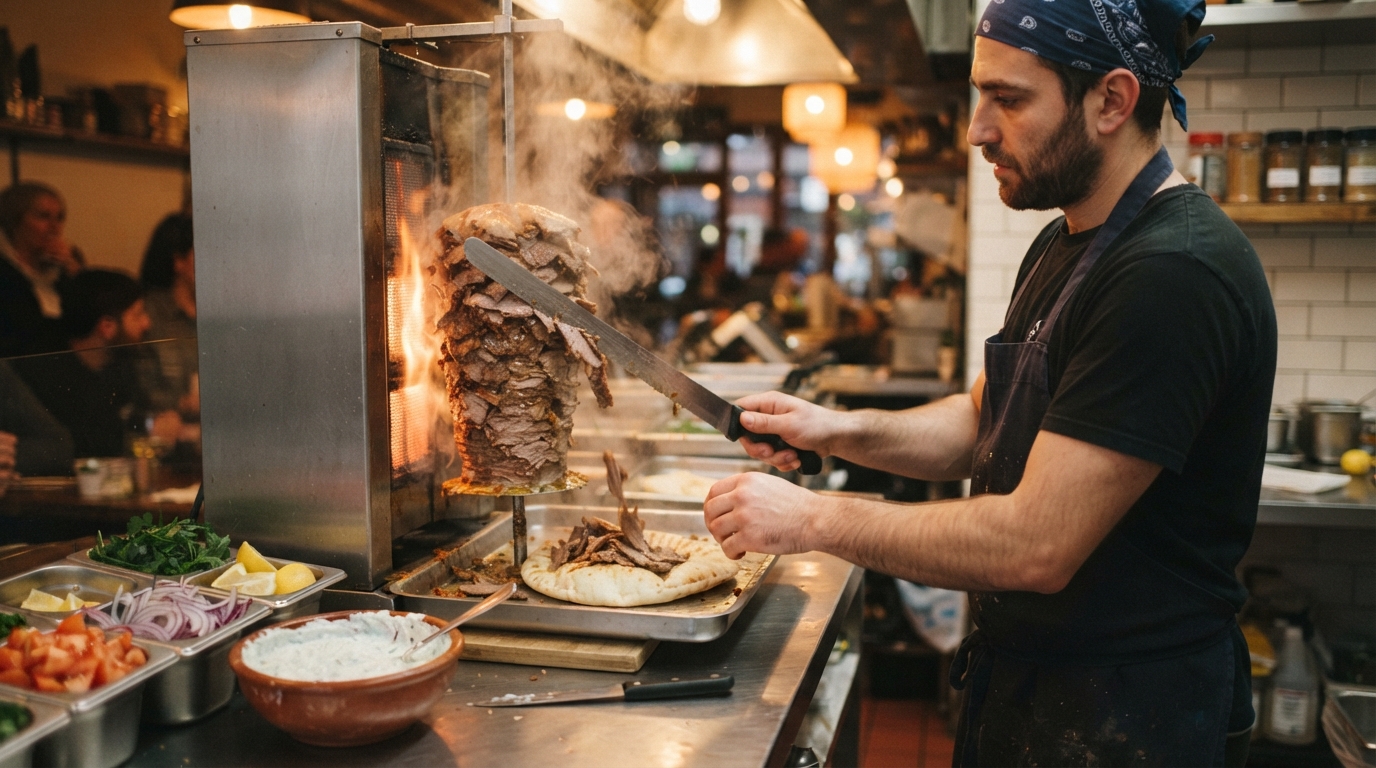
- Gyro pita pairs seasoned, slow-roasted meat with warm flatbread, fresh vegetables, and a cool sauce, making it one of the most recognizable Mediterranean street foods.
- Its appeal comes from portability, balanced flavor, and ingredients that have changed little over decades of preparation.
- Residents across Lincoln, Nebraska looking for this dish can find it prepared using traditional layering and roasting methods.
Few handheld dishes have traveled as far or lasted as long as the gyro pita. It combines spit-roasted meat, soft flatbread, and simple garnishes into a format that works equally well for a quick lunch or a late-night meal, which explains why it remains a fixture on Mediterranean and Greek-inspired menus.
The gyro pita in Lincoln, Nebraska builds its identity on contrast: warm, charred meat against cool yogurt sauce, soft bread against crisp vegetables. That tension between textures and temperatures is part of why the format has stayed consistent across generations rather than being reinvented into something unrecognizable.
The Origins Behind a Street Food Staple
The gyro traces back to vertical rotisserie cooking methods common across the eastern Mediterranean, where meat is stacked and slow-roasted on a rotating spit. The technique allows outer layers to crisp while inner layers stay moist, a process that distinguishes gyro meat from grilled or pan-seared alternatives.
Pita bread itself has an even older history as a regional staple grain product, used as both a wrapper and a utensil for scooping. Pairing the two into a single handheld item simplified what was once a multi-component meal into something that could be eaten standing up, which is central to its street food identity.
What Goes Into a Traditional Gyro Pita
A standard preparation follows a fairly consistent structure, even as regional variations exist:
- Seasoned meat, typically lamb, beef, chicken, or a blend, roasted on a vertical spit and shaved into thin strips
- Warm pita bread, often lightly grilled or steamed for flexibility
- Fresh vegetables such as tomato, onion, and lettuce
- A yogurt-based sauce, most commonly tzatziki, made with cucumber, garlic, and herbs
This combination keeps the dish balanced rather than heavy, since the acidity in the sauce and vegetables offsets the richness of the roasted meat. The structure also makes it adaptable, as cooks can adjust spice blends or swap proteins without changing the overall format.
Why the Format Still Works for Modern Eaters
Portability remains one of the biggest reasons gyro pita has not faded from popularity. It requires no utensils, holds its shape well, and can be eaten within minutes of being assembled, which fits the pace of casual dining and takeout culture.
The dish also benefits from being naturally customizable. Protein choice, sauce intensity, and vegetable mix can shift to match personal preference without disrupting the core eating experience. According to the USDA Food Data Central database, lean roasted meats paired with vegetables and yogurt-based sauces can offer a reasonably balanced protein-to-vegetable ratio compared to many fried fast-food alternatives.
For readers in Lincoln, Nebraska, the appeal often comes down to convenience paired with a flavor profile that differs from typical American fast food. The dish offers a middle ground between a quick meal and something that still feels prepared with intention.
Gyro Pita Compared to Similar Handheld Dishes
| Dish | Base | Typical Protein | Key Sauce |
| Gyro Pita | Pita flatbread | Lamb, beef, or chicken | Tzatziki (yogurt-based) |
| Shawarma Wrap | Flatbread or laffa | Chicken, beef, or lamb | Garlic sauce or tahini |
| Falafel Pita | Pita flatbread | Chickpea patties (vegetarian) | Tahini or hummus |
| Souvlaki Pita | Pita flatbread | Skewered grilled meat chunks | Tzatziki |
The table shows how closely related dishes share a flatbread base but differ in protein preparation and sauce choice, which helps explain why gyro pita is often confused with, yet distinct from, shawarma or souvlaki.
Frequently Asked Questions
Is gyro pita the same as a shawarma wrap? No. Both use rotisserie-cooked meat and flatbread, but gyro pita typically uses a Greek seasoning blend and tzatziki, while shawarma leans on Middle Eastern spices and garlic or tahini-based sauces.
What meats are traditionally used in a gyro pita? Lamb and beef are the most traditional choices, though chicken is widely offered as a lighter alternative in many modern preparations.
Can gyro pita be made without meat? Some versions substitute grilled vegetables or plant-based proteins, though the classic preparation centers on spit-roasted meat.
Why is pita bread used instead of other flatbreads? Pita’s pocket-friendly texture and flexibility make it easier to wrap around fillings without tearing, which suits the handheld nature of the dish.
Where to Learn More Locally
Based in USA, Sultan’s Kite serves customers across Lincoln, Nebraska.
Current menu details for Read about gyro pita are published for reference by local diners.