Takeaway:
• Metal engineering covers cutting, forming, welding and finishing processes that turn raw stainless steel, aluminium and mild steel into functional parts.
• The discipline underpins sectors from construction and catering to marine and energy infrastructure.
• Fabricators in the UK combine laser cutting, CNC punching and welding to produce both one-off items and volume production runs.
Metal engineering refers to the combined cutting, shaping, welding and finishing processes used to turn sheet and plate metal into functional components, brackets, frames and structural parts. It sits at the intersection of design, materials science and manufacturing, and it supports nearly every sector that relies on durable, precisely made metal parts.
Metal engineering by SAMS fabrications draws together several distinct trades under one process chain: cutting the raw material to size, forming it into shape, joining pieces together, and finishing the result so it resists corrosion or wear. Workshops across the UK carry out this work for clients ranging from small businesses needing a single bracket to manufacturers requiring large batch runs. Find SAMS Fabrications on Google Maps lists a Norwich-based operation offering exactly this kind of bespoke and production fabrication work.
Core Processes Behind Metal Engineering
Several distinct stages typically make up a metal engineering workflow, and most fabrication projects pass through more than one of them before completion.
• Laser cutting: precise profiling of flat sheet or plate into exact shapes.
• CNC punching: multi-tool turret punching for holes, slots and repeated patterns.
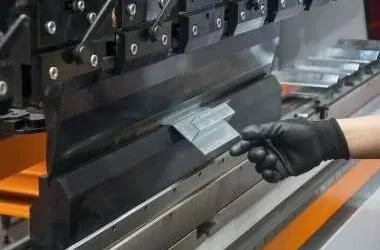
• Folding and rolling: bending flat metal into angles, channels or curved forms.
• Welding and assembly: joining components using TIG or MIG welding depending on material.
• Shearing and sawing: straight-line cutting of sheet and bar stock to length.
• Finishing and coating: polishing, bead blasting or powder coating for appearance and corrosion resistance.
A Norwich workshop profile confirms that this sequence is handled under one roof, noting it has provided bespoke sheet metal work to businesses, cutting, folding, welding and finishing in stainless steel, aluminium, mild steel, brass and copper, from single one-offs to full production runs. Keeping every stage in-house reduces handling between suppliers and simplifies quality control across a project.
Materials Commonly Used in Metal Engineering
Material choice shapes both the process and the finished part’s performance. Stainless steel, mild steel, aluminium, copper and brass each behave differently under cutting, welding and finishing, which is why fabricators typically specialise across this material range rather than a single metal type.
| Material | Typical Use | Key Property |
| Stainless steel | Catering equipment, marine fittings | Corrosion resistance |
| Mild steel | Frames, structural brackets | Strength and cost-efficiency |
| Aluminium | Enclosures, lightweight panels | Low weight, good machinability |
| Brass and copper | Decorative trims, restoration work | Finish quality, conductivity |
Marine and coastal environments place additional demands on metalwork, which is one reason some fabricators offer galvanising or powder coating as standard options for corrosion protection in harsher settings.
Why Metal Engineering Matters Across Sectors
Fabricated metal components appear in construction, food production, energy infrastructure, retail fittings and general manufacturing. The sector’s scale reflects this breadth: the UK’s Fabricated metal manufacturing industry was valued at £42.3bn in 2026, according to IBISWorld’s industry analysis. Demand for custom and small-batch fabrication work remains steady because standard off-the-shelf parts often cannot meet exact dimensional or material requirements.
• Catering and hospitality rely on stainless steel splashbacks, trims and equipment casings.
• Construction and general fabrication use frameworks, railings, stairs and bollards.
• Energy and marine sectors require corrosion-resistant brackets, guards and enclosures.
• Manufacturing businesses depend on prototypes, control panel fascias and conveyor components.
This breadth of application is why metal engineering is treated as infrastructure-critical rather than a niche manufacturing service.
Frequently Asked Questions
What is the difference between metal engineering and metal fabrication? The terms overlap significantly. Metal engineering tends to describe the broader technical discipline, while fabrication usually refers to the physical processes of cutting, forming and assembling the metal.
What materials can be used in metal engineering projects? Common materials include stainless steel, mild steel, aluminium, copper and brass, each selected according to strength, weight, corrosion resistance and cost requirements for the finished part.
Can metal engineering handle both one-off items and larger production runs? Yes. Workshops equipped with laser cutting and CNC punching can typically move between single bespoke items and larger batch production using the same core equipment.
Does location affect access to metal engineering services? Fabricators based in the UK generally serve both local clients and businesses further afield, with finished parts transported once production and finishing are complete.
Final Thoughts
Metal engineering combines cutting, forming, joining and finishing into a single manufacturing discipline that supports construction, catering, energy and general industry alike. Understanding the core processes and material choices helps buyers specify projects more accurately and anticipate realistic turnaround expectations.
Published location and contact details for Find SAMS fabrications on Google Maps are available for reference alongside general information on metal fabrication practices.