Key takeaway:
• A correctly installed garage door requires accurate opening measurements, proper spring calibration, and verified safety sensor alignment.
• Professional installation typically includes removal of the old door, structural checks, and a final safety test of the opener system.
• Homeowners in Taylorville, IL should confirm wind-load and code compliance before scheduling a new door.
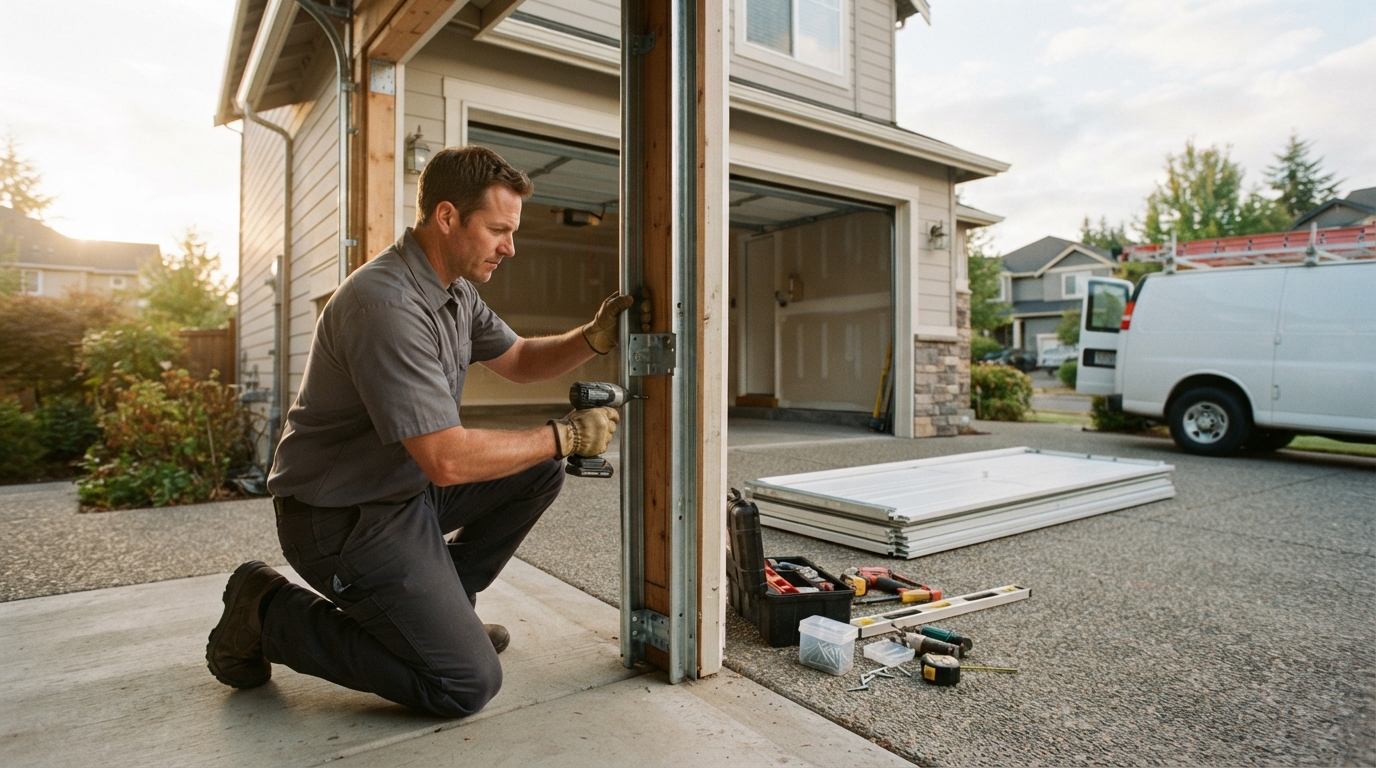
A properly fitted garage door should close flush against the frame, operate without scraping, and pass a balance test where it holds position when disconnected from the opener. Getting this right the first time depends less on the door panel itself and more on precise measurement, spring tensioning, and alignment work performed during Garage Door Installation.
Homeowners researching this project usually want to know what the process involves, how long it takes, and what separates a durable installation from one that fails within a few years. The sections below walk through the practical steps, common pitfalls, and questions that come up most often for houses in Taylorville, IL.
What Happens During a Professional Installation
A new garage door installation generally follows a predictable sequence, though exact steps vary by door type and opener compatibility.
• Measurement of the rough opening to confirm the door will sit without gaps or binding
• Removal and disposal of the old door, track, and hardware
• Installation of new tracks, panels, and weatherstripping
• Mounting and calibration of torsion or extension springs sized to the door’s weight
• Attachment of the opener rail and motor, followed by testing of travel limits and auto-reverse function
Spring sizing and track alignment are the two areas most likely to cause long-term problems if rushed. A garage door guide notes that a correct installation should place the door squarely against the building plane and compress the perimeter seal evenly, since over-tightening the track to eliminate gaps is a common mistake that causes binding later.
Code Compliance and Safety Standards Worth Knowing
Garage doors are regulated under building codes because they represent the largest moving opening in most homes. The Door and Access Systems Manufacturers Association (DASMA) maintains a certified labeling program that documents wind-load ratings and installation standards used across the industry.
For readers in Taylorville, IL, this matters most when replacing an older door that predates current safety sensor requirements. Federal law requires photo-eye sensors near the floor that reverse the door if an obstruction is detected, a feature that should be tested after every new installation, not assumed to work automatically.
Comparing Installation Scenarios
| Scenario | Typical Scope | Key Consideration |
| Full door replacement | Old door removed, new door and track installed | Opening must be remeasured even if replacing a similar size |
| Door plus new opener | Installation includes motor, rail, and sensor wiring | Opener horsepower should match door weight and size |
| Opener-only upgrade on existing door | Opener swapped, door and track retained | Existing track and spring condition should be inspected first |
| Door replacement on older framing | New door installed on original jambs and header | Framing should be checked for level before installation |
Preparing Your Home Before Installation Day
A few steps before the crew arrives can shorten the job and reduce surprises.
1. Clear the garage interior and driveway of vehicles and stored items near the opening.
2. Note any existing issues, such as uneven floor slope or visible daylight gaps around the current door.
3. Confirm whether the existing opener will be reused or replaced, since this affects wiring and bracket work.
4. Ask about headroom clearance if the garage has low ceiling joists or existing shelving near the track path.
Homes around Taylorville, IL often have garages built decades ago, so older framing or non-standard opening sizes are worth flagging in advance rather than discovering them mid-installation.
Frequently Asked Questions
How long does a typical garage door installation take? Most single-door residential installations are completed in a few hours, though jobs involving opener replacement, framing repair, or custom sizing can extend the timeline.
Do I need a permit for a new garage door in Illinois? Permit requirements vary by municipality and project scope, so it is worth confirming with the local building department before work begins, especially if structural framing changes are involved.
Can an existing opener be reused with a new door? Sometimes, but the opener’s horsepower and mounting bracket need to match the new door’s weight and travel distance, which a technician can verify during an inspection.
What is the biggest sign an installation was done poorly? Scraping noises, uneven gaps along the frame, or a door that will not hold its position when manually lifted halfway all point to alignment or spring-tension problems.
Final Notes and Local Service Information
Based in Decatur, IL, the company serves customers across Taylorville, IL.
Current availability details for Midstate Overhead Doors Inc are published for the local service area.