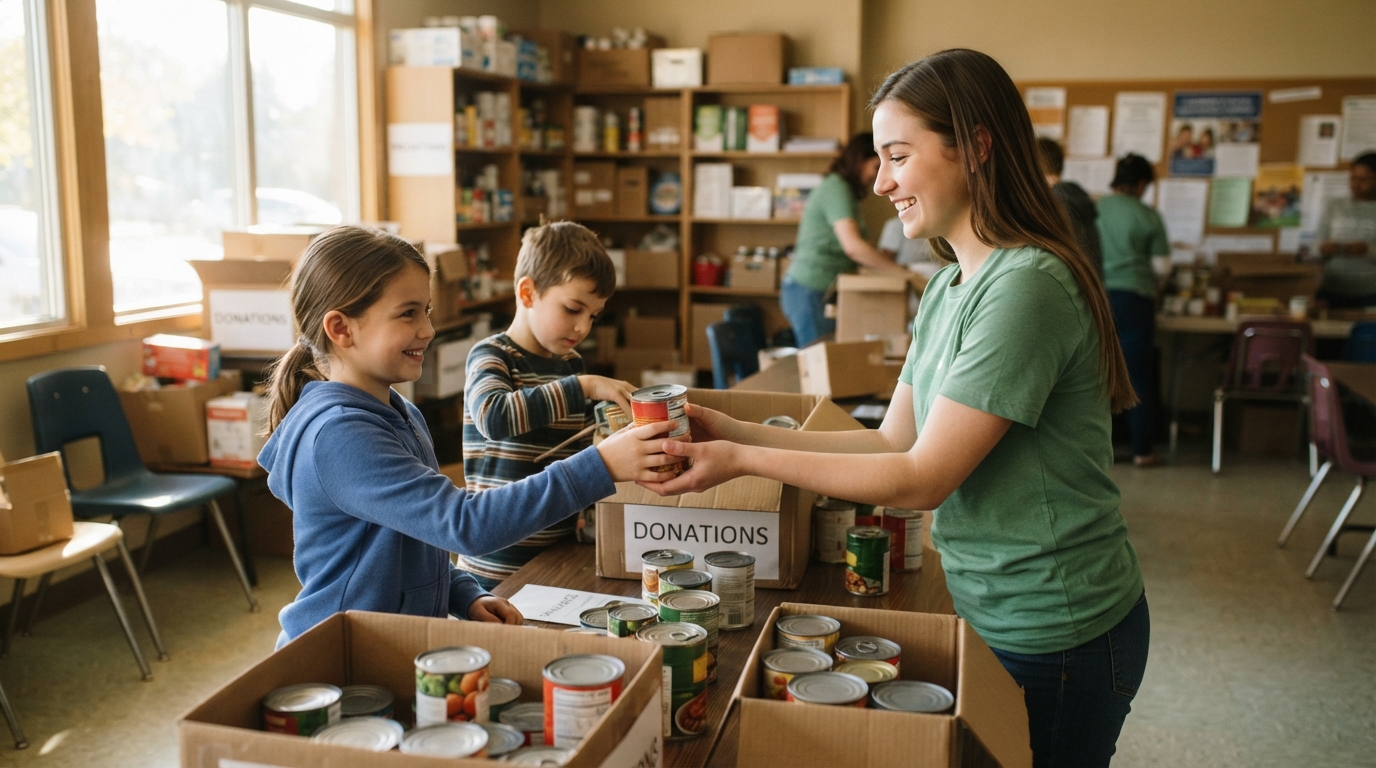
Parents and educators looking for ways to involve children in service work often ask where to start. The most effective approach matches a child’s age and interests to a structured activity, such as a food drive, cleanup event, or peer support program, so the experience feels purposeful rather than overwhelming.
Finding the right setting matters as much as the activity itself. Families who want to volunteer with kids often look for organized programs that provide supervision, age-appropriate tasks, and a clear sense of how the work helps others.
Structured youth programs can make this easier by pairing children with projects suited to their developmental stage. Many community organizations build service components directly into after-school or club-based activities, giving kids repeated exposure to giving-back experiences rather than a single isolated event.
Age-Appropriate Volunteer Activities for Kids
Matching a task to a child’s age keeps the experience safe and engaging, not frustrating.
- Ages 5-7: simple sorting tasks, making cards for seniors, or collecting canned goods.
- Ages 8-11: assembling care packages, participating in park or trail cleanups, or helping organize donation drives.
- Ages 12 and up: peer mentoring, tutoring younger children, or assisting with event setup at community fundraisers.
Breaking tasks into smaller, manageable steps helps younger children stay engaged without losing interest halfway through a project.
Comparing Common Youth Volunteer Formats
Different volunteer formats offer different levels of structure and skill-building. The table below outlines common options families consider when looking for service opportunities suited to children.
| Volunteer Format | Typical Age Range | Skill Focus |
| One-time community cleanup | 6 and up | Teamwork, environmental awareness |
| Ongoing peer mentoring | 10 and up | Communication, responsibility |
| Food or clothing drives | 5 and up | Organization, empathy |
| Club-based service projects | 6-18 (program dependent) | Consistency, leadership |
Ongoing programs, such as club-based service projects, tend to build skills more gradually than single-day events because children return to similar tasks over time and see the results of repeated effort.
Why Early Volunteering Experiences Matter
Research on youth development consistently links early service experiences to stronger social and emotional skills later in adolescence. According to the Corporation for National and Community Service, structured volunteer programs can help young people build civic engagement habits that carry into adulthood.
Consistent, low-pressure service opportunities also give children a chance to practice cooperation with peers outside the classroom. This repeated, informal teamwork often supports confidence-building in ways that occasional one-off events cannot replicate.
For families in Noblesville, IN, local youth clubs and community centers often build these repeated service touchpoints into regular programming, making ongoing volunteering more accessible for school-age children.
Business Info
Based in the USA, supports youth programming that reaches families across Noblesville, IN. Community-based organizations like this typically structure activities around after-school hours, giving working families a consistent schedule for youth engagement.
Frequently Asked Questions
What is a good first volunteer activity for a young child? Simple, hands-on tasks such as making cards for seniors or sorting donated food items work well for children under eight, since these activities require minimal supervision and produce a visible result.
How often should kids volunteer to see real benefits? Repeated, low-intensity involvement, such as a monthly cleanup or an ongoing mentoring role, tends to build more lasting habits than a single annual event, though even occasional participation introduces useful concepts.
Can volunteering help with a child’s social skills? Group-based service activities naturally require cooperation, communication, and shared problem-solving, which can support social skill development alongside the charitable impact of the work itself.
Are there age limits for most youth volunteer programs? Age requirements vary by organization and activity type; many programs offer tiered opportunities starting around age five for simple tasks and expanding to more independent roles by early adolescence.
Final Thoughts and Next Steps
Hours of operation and program details for Boys & Girls Club of Noblesville are listed for families planning youth activities in the area.