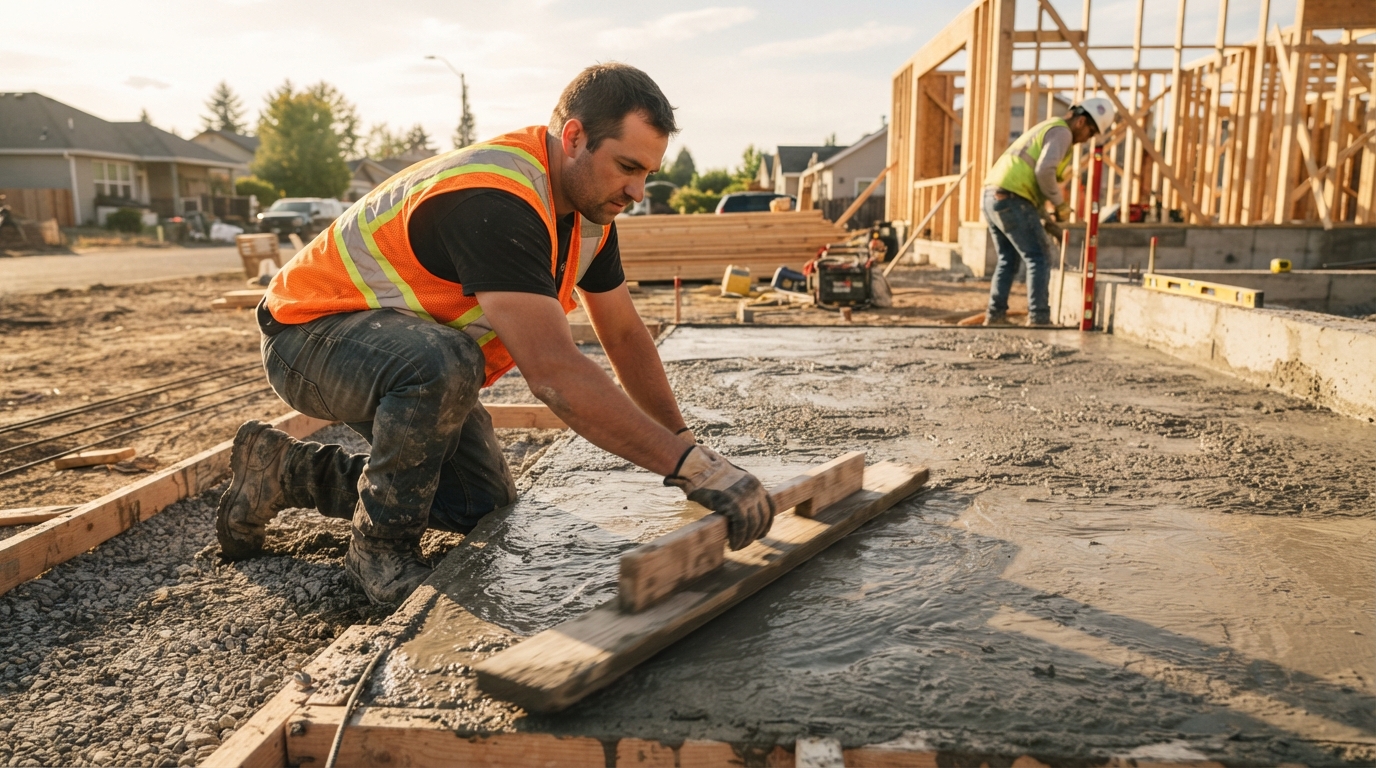
Choosing a concrete slab contractor starts with a short list of practical questions covering preparation, materials, and project timing. Getting clear answers before work begins reduces the risk of cracking, settling, or scope disputes after the pour.
A homeowner comparing bids should treat the vetting process as more than a price check. Asking a concrete slab contractor about site evaluation, drainage, and reinforcement methods reveals how thoroughly a company plans before equipment arrives. Contractors who walk through these steps in detail typically have established processes rather than a one-size-fits-all approach.
Site Preparation and Subgrade Questions
Subgrade work determines whether a slab stays level for decades or develops cracks within a few years. Ask the contractor:
- How will the soil be compacted and tested before the pour?
- What base material (gravel, sand, or crushed stone) will be used
- How drainage is addressed to prevent water pooling under the slab
- Whether soil conditions on the specific lot require extra excavation
Indianapolis, IN sits on clay-heavy soil in many neighborhoods, which can shift with moisture changes and affect how a slab performs over time. A contractor familiar with the area should be able to describe how local soil conditions influence their compaction and base preparation approach.
Mix Design, Reinforcement, and Timeline
Concrete mix strength and reinforcement type affect durability under vehicle loads, freeze-thaw cycles, and everyday wear. Relevant questions include:
- What PSI rating the mix will meet for the intended use (driveway, patio, or foundation slab)
- Whether rebar, wire mesh, or fiber reinforcement will be used
- How thick the slab will be poured
- What the expected timeline is from forming to final finish
| Project Element | Question to Ask | Why It Matters |
| Mix strength | What PSI is specified for this slab | Determines load capacity and crack resistance |
| Reinforcement | Rebar, mesh, or fiber | Affects long-term structural stability |
| Thickness | How many inches will be poured | Impacts durability under vehicle or foot traffic |
| Timeline | Days from prep to finished pour | Helps plan around weather windows |
Curing time also matters, particularly during cooler months. According to ACI Committee 306 guidance, cold weather concreting applies when the average daily ambient temperature falls below 40°F for more than three successive days, which can affect scheduling for late-fall or early-spring pours in the region.
Permits, Weather Contingencies, and Warranty Terms
Local permitting requirements and seasonal weather both influence how a project unfolds. A contractor should outline:
- Whether a permit is required for the specific slab type and who files it
- How the schedule shifts if rain or freezing temperatures delay the pour
- What warranty coverage applies to cracking, settling, or surface defects
- Whether cleanup and site restoration are included in the quoted price
Indianapolis, IN experiences freeze-thaw cycles each winter, so asking how a contractor adjusts curing and protection methods during cold snaps is a reasonable step before committing to a start date.
Business Background
Based in Westfield, IN, Custom Concrete serves customers across Indianapolis, IN, working on foundation, slab, and related concrete projects for residential and commercial clients. Reviewing a contractor’s service area and project history alongside the questions above gives homeowners a more complete picture before work begins.
Frequently Asked Questions
How long does a concrete slab need to cure before use? Curing timelines vary by temperature and mix type, so confirm the specific schedule with the contractor for the planned pour date.
What questions reveal poor subgrade preparation practices? Asking how soil will be tested and compacted, and what base material will be used, often distinguishes thorough contractors from those who skip preparation steps.
Should a contract specify PSI strength and reinforcement type? Yes, written contracts that list mix strength, reinforcement method, and slab thickness reduce the chance of later disputes over quality.
Does weather affect scheduling for a concrete slab project in Indianapolis, IN? Seasonal temperature swings can shift pour dates or require extended curing protection, so discussing contingency plans ahead of time is useful.
Reviewing these questions before signing a contract helps homeowners compare bids on substance rather than price alone. Current service area details for Custom Concrete are available for residents planning a slab project in the region.