Short version:
- Effective corporate video depends on clear messaging, pre-production planning, and professional execution across filming, lighting, and sound.
- Scripting and storyboarding before filming reduces reshoots and keeps the final video aligned with business goals.
- Post-production choices, including pacing, color correction, and sound mixing, determine whether a video holds viewer attention.
Corporate video production works when a clear message, disciplined planning, and technical execution line up from the first script draft to the final export. A video that looks polished but lacks a defined purpose rarely performs well, while even a modest production can succeed if the story, pacing, and audio are handled with care.
Businesses searching for Rabbit Hole Media Lab production services are typically trying to solve a specific problem: how to turn a marketing, training, or recruitment need into a video that actually holds attention and drives action. That search intent points to a practical need for structured production support rather than just camera operators. Companies in Austin, TX exploring this topic are usually comparing production approaches before committing a budget to a project.
Why Pre-Production Planning Decides Most of the Outcome
A video’s success is largely determined before any camera rolls. Skipping this stage is one of the most common reasons corporate videos underperform.
- A written script or outline keeps messaging consistent across departments and stakeholders.
- Storyboards or shot lists prevent wasted time on set and reduce costly reshoots.
- Location scouting and lighting assessments done in advance avoid last-minute technical problems.
- Defining the target audience early shapes tone, pacing, and length decisions later.
Companies that treat pre-production as optional often end up with footage that technically works but does not communicate a clear point. Planning time spent here typically reduces total production time overall.
Technical Execution: Filming, Lighting, and Sound
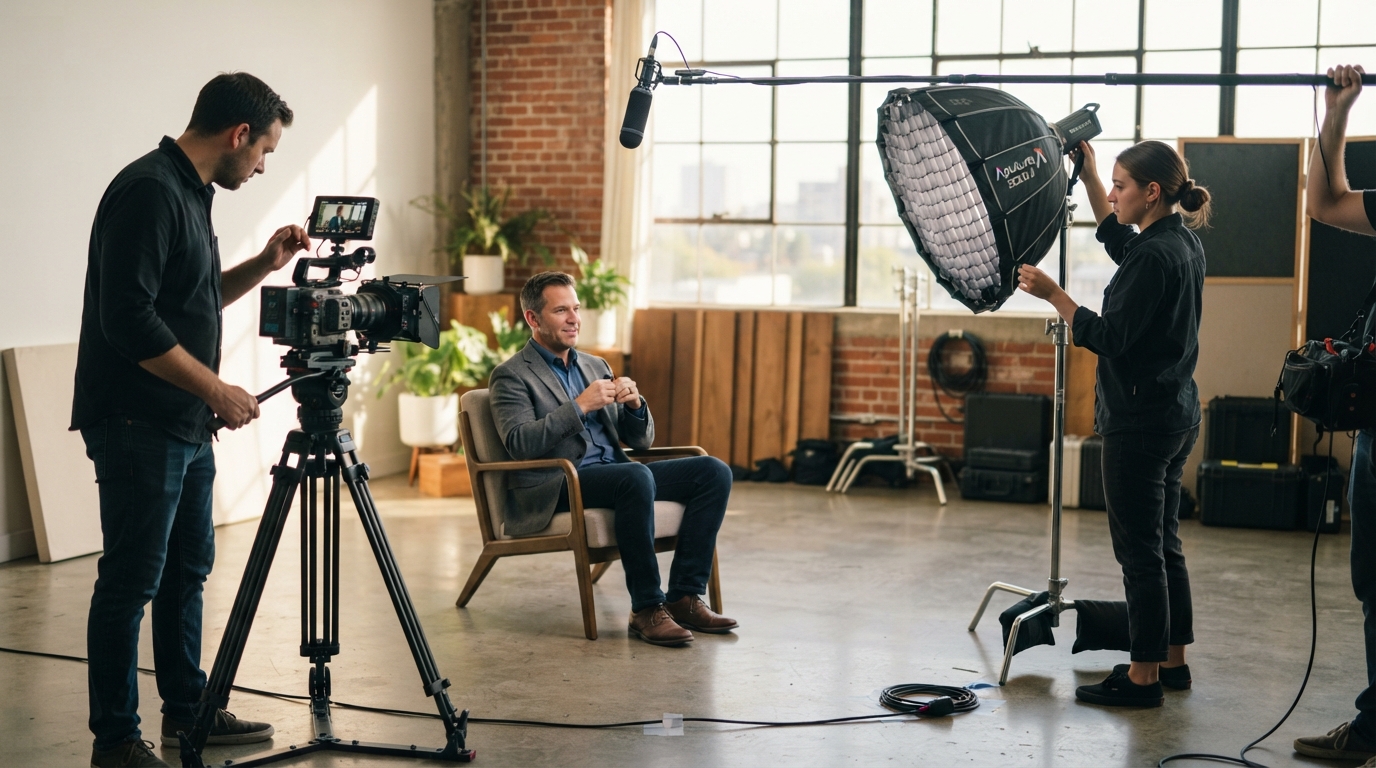
Three technical elements separate amateur-looking footage from professional corporate video: camera work, lighting, and audio capture. Audio quality in particular is frequently underestimated, yet poor sound is one of the fastest ways to lose viewer trust even when visuals are strong.
- Stable, well-composed shots using tripods or gimbals avoid distracting camera shake.
- Three-point or natural lighting setups reduce harsh shadows on speakers and products.
- External microphones, rather than built-in camera audio, capture clearer dialogue in office or studio settings.
- Multiple camera angles during interviews give editors flexibility to cut around pauses or mistakes.
Research on workplace communication from the U.S. Bureau of Labor Statistics indicates that clear, well-structured communication materials support better employee understanding of policies and training content, which is a relevant consideration for companies producing internal corporate video.
Post-Production Choices That Affect Viewer Retention
Editing is where raw footage becomes a finished story, and small decisions here have an outsized effect on whether viewers watch to the end.
| Post-Production Element | What It Affects | Common Mistake to Avoid |
|---|---|---|
| Pacing and cut timing | Viewer attention and drop-off rate | Scenes held too long without visual change |
| Color correction | Consistency across different shots and lighting | Mismatched skin tones or color temperature |
| Sound mixing | Clarity of dialogue versus background music | Music overpowering spoken narration |
| Motion graphics and text | Reinforcing key points visually | Overcrowded screens with too much on-screen text |
Pacing decisions in particular should match the platform where the video will be shown, since attention spans differ between a website landing page, a social feed, and an internal training portal.
Matching Production Quality to Business Goals
Not every corporate video needs the same budget or crew size. A recruitment video aimed at building culture awareness has different technical requirements than a product demo meant to close sales.
- Internal training videos prioritize clarity and accurate information over cinematic style.
- Marketing and brand videos benefit from higher production value, including professional lighting and original music.
- Executive or investor communications often require formal framing, clean audio, and minimal distractions.
- Social media clips need shorter runtimes and captions for viewers watching without sound.
Matching the production approach to the actual goal, rather than defaulting to the most elaborate option available, tends to produce better results for the budget spent.
Frequently Asked Questions
What makes a corporate video effective rather than just well-produced? A video becomes effective when it has a clear message tied to a specific business goal, not simply strong visuals. Technical polish supports the message but does not replace the need for a defined purpose and target audience.
How long should a corporate video be? Length depends on platform and purpose; internal training content can run longer than social or marketing clips, which typically perform better when kept short and focused on one idea.
Does every corporate video need a professional crew? Simple internal updates can sometimes be filmed with basic equipment, but videos intended for external audiences, recruitment, or brand marketing generally benefit from professional lighting, audio, and editing support.
What is the biggest mistake companies make in corporate video production? Skipping the planning stage is one of the most frequent issues, since unclear scripts or missing shot lists often lead to reshoots and a final video that does not match the original goal.
Final Notes and Business Information
Based in USA, Rabbit Hole Media Lab serves customers across Austin, TX.
Readers can Get directions to Rabbit Hole Media Lab for published location and contact details.