Summary:
• Most dental problems are preventable, but routine checkups are the part patients skip most often.
• Preventive visits, not emergency treatment, remain the most cost-effective way to avoid major dental work.
• My Tamarac Dentist, based in Tamarac, FL, lists cleanings, checkups, and restorative services that support this preventive approach for patients in North Lauderdale, FL
Patients often assume a dentist visit is only necessary when something hurts. The more accurate answer is that a Dentist visit on a regular schedule catches problems before pain, cost, and treatment complexity all increase together.
That timing gap is where most dental damage actually happens. By the time a cavity causes discomfort, decay has often progressed past the stage where a simple filling would have solved it, and the same pattern applies to gum disease, cracked teeth, and failing old fillings.
The Checkup Habit Most People Get Wrong
Many patients treat dental visits as optional once a tooth stops hurting. That habit works against them statistically.
• Children aged 6 to 9 from lower income households were more than twice as likely (25%) to have untreated cavities than children from higher income households (10%).
• 1 in 5 adults (21%) aged 20 to 64 years have at least one untreated cavity, according to the CDC.
• More than 4 in 5 adults keep their teeth until they die, which depends heavily on consistent preventive care.
These figures come from the CDC’s oral health surveillance data, which tracks decay and tooth retention trends across age groups nationally. The pattern holds regardless of zip code: untreated decay rarely stays small.
What a Standard Visit Actually Covers
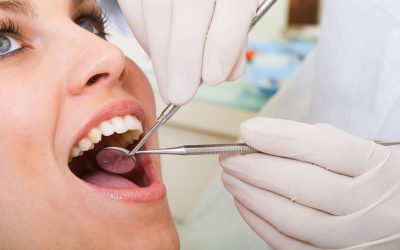
A routine exam is not just a polish. It typically includes
1. A visual and instrument-based exam for decay, cracks, and wear
2. Professional removal of plaque and tartar buildup
3. A gum health assessment to screen for early periodontal disease
4. X-rays when clinically indicated, not on a fixed yearly rule
On that last point, the guidance has shifted. How often you need dental X-rays is set by your personal risk of decay and gum disease, not by a fixed annual rule or your insurance plan. Under the joint ADA and FDA patient-selection criteria, a low-risk adult with healthy teeth and no recent cavities may need bitewing X-rays only every 24 to 36 months, while a higher-risk adult can need them every 6 to 18 months. That distinction rarely gets explained clearly at the front desk, which leaves patients assuming every visit requires imaging.
Why Six Months Is a Starting Point, Not a Rule
The twice-a-year interval gets repeated so often that it sounds absolute. It is not.
|
Patient Risk Level |
Typical Checkup Interval |
Typical Bitewing X-Ray Interval |
|
Low risk, healthy adult |
About every 6 months |
Every 24 to 36 months |
|
Elevated risk (gum disease, diabetes, dry mouth) |
Every 3 to 4 months |
Every 6 to 18 months |
|
New patient, any risk level |
Initial exam, then set individually |
Baseline set, then as needed |
Insurance billing cycles reinforce the six-month figure because that is what most plans cover, not because it is a universal medical requirement. Patients with active gum disease, frequent cavities, or conditions like dry mouth or diabetes often need shorter intervals, while some low-risk adults can safely go longer between cleanings.
Preventive Care in North Lauderdale, FL
Humidity, sugary beverage consumption, and inconsistent access to fluoridated water are regional factors that can affect cavity and gum disease rates in South Florida communities, including North Lauderdale, FL. Skipping routine cleanings in this climate does not pause decay; it just delays detection until a filling becomes a crown or a crown becomes an extraction.
Based in Tamarac, FL, My Tamarac Dentist serves patients across North Lauderdale, FL with services that include cleanings and checkups, cosmetic dentistry, and restorative treatments such as fillings and crowns. Reviewing what a checkup actually includes, and how often one is genuinely needed, helps patients ask better questions before agreeing to a treatment plan.
Frequently Asked Questions
Does skipping a cleaning for a year actually cause harm? It depends on individual risk. A low-risk adult with no active decay may tolerate a longer gap, but anyone with a history of cavities or gum disease is more likely to see measurable deterioration within that time.
Are dental X-rays safe if taken every visit? Radiation exposure from a standard bitewing set is low, but frequency should still match individual risk rather than being applied automatically at every appointment.
Why do insurance plans only cover two cleanings a year? That figure reflects a billing policy aligned with average-risk patients, not a clinical ceiling; higher-risk patients may need more frequent care regardless of what a plan reimburses.
What is the biggest mistake patients make with checkups? Waiting for pain before scheduling a visit, which usually means decay or gum disease has already advanced past the stage of simple, low-cost treatment.
Final Notes on Choosing Preventive Care
Dental health outcomes depend less on luck and more on consistent monitoring, so understanding the actual guidelines behind checkup frequency and X-ray scheduling puts patients in a better position to ask informed questions at their next appointment.
Scheduling details and provider background for View Dentist Information are published for reference by patients comparing local preventive care options.