Summary first:
• Standing water, soggy turf, and water near a foundation after rain are the clearest signs a yard may need subsurface drainage.
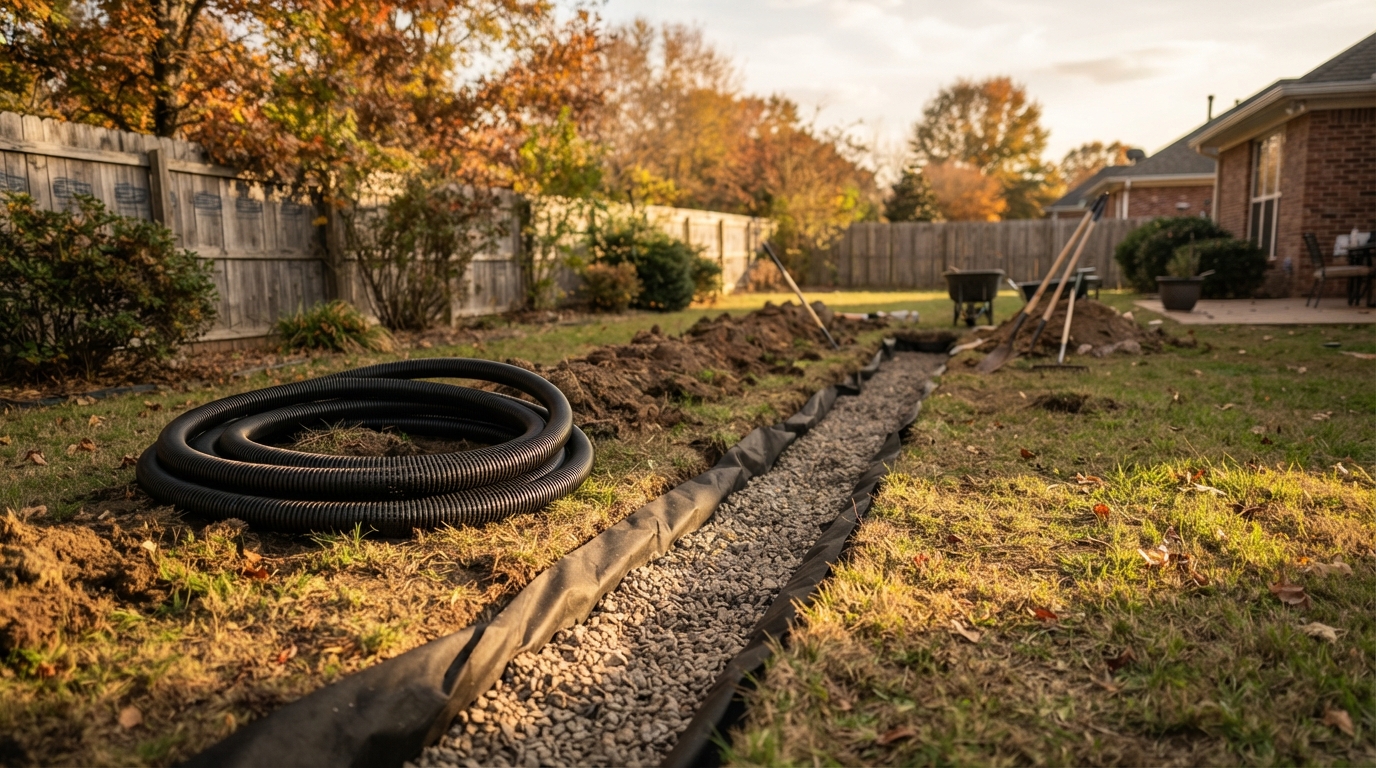
• French drainage uses a gravel-and-pipe trench to redirect groundwater away from structures and low-lying areas.
• Virginia Beach, VA properties with clay soil or flat lots are especially prone to the drainage issues this system addresses.
A yard that stays wet for days after a storm, develops spongy low spots, or sends water toward a foundation wall is often signaling a subsurface drainage problem rather than a simple surface issue. These patterns typically point toward the need for a trench-based system designed to intercept and reroute groundwater before it causes structural or landscape damage.
French Drainage works by channeling water through a perforated pipe buried in gravel, moving it away from the area where it collects. Rain Drains LLC installs these systems for both residential and commercial properties, and its approach to drainage design factors in the slope, soil type, and runoff patterns unique to each site. The approach is distinct from surface grading, which only addresses water sitting on top of the soil rather than moving beneath it.
Common Signs of Poor Yard Drainage
Several visible symptoms suggest a yard may need subsurface intervention rather than a quick fix:
• Standing water that lingers in the same spot more than 24 hours after rain stops
• Soggy, spongy turf or dying grass in low-lying sections of the lawn
• Water pooling along a foundation wall or crawl space entrance
• Erosion channels or bare soil patches where runoff repeatedly flows
• A persistent mosquito presence tied to pooled water
• Cracking or shifting in nearby patios, walkways, or driveway aprons
A builder’s drainage guide notes that a high water table sitting close to the surface cannot be fixed by grading alone, because the water table sits close to the surface, especially in spring or after prolonged rain, and surface grading alone will not fix this because the water is coming from below, meaning subsurface drainage is needed to intercept and redirect the groundwater.
Why Soil and Slope Matter in Virginia Beach
Clay-heavy soil is one of the most common underlying causes of chronic yard flooding, since it absorbs water far more slowly than sandy or loamy soil. One drainage resource explains that heavy clay soils and compacted subgrades drain very slowly, so water sits on the surface because it cannot percolate down, and French drains help by providing a path of least resistance that water can follow instead of sitting in the clay. Flat terrain compounds the problem, since water has nowhere to flow without a built-in slope guiding it toward an outlet.
Federal stormwater guidance offers a useful benchmark for evaluating whether a lot is a good candidate for subsurface drainage. The EPA’s stormwater management guidelines describe infiltration rate ranges that help determine whether soil can absorb water quickly enough for a drainage system to function as designed, rather than becoming saturated and ineffective. Lots in Virginia Beach, VA often combine flat grading with poorly draining soil, a pairing that tends to produce the standing-water symptoms described above more frequently than sloped, sandy terrain.
Drainage Options Compared
Not every wet-yard problem calls for the same fix. The table below outlines where French drainage fits relative to other common approaches.
| Drainage Method | Best For | Relative Cost | Maintenance Level |
| Downspout extension | Roof runoff pooling near foundation | Low | Low |
| Regrading | Negative slope directing water toward the house | Moderate to high | Low |
| French drain | Subsurface groundwater, clay soil, persistent wet spots | Moderate | Low once installed |
| Catch basin | Collecting water from a specific low point | Moderate | Periodic clearing |
A yard drainage guide summarizes the core function this way: a French drain collects and redirects water underground through a perforated pipe surrounded by gravel, works for most drainage problems, and disappears beneath the lawn once installed, catching water before it reaches problem areas.
When to Call a Drainage Professional
Homeowners can address minor issues, such as short downspout extensions, without specialized equipment. Site evaluation becomes more important once water is reaching a foundation, crawl space, or shared property line, since outlet placement and slope calculations affect whether a system performs correctly over time. A properly planned trench also needs a continuous downward grade toward a safe discharge point, and skipping that step is a common reason installed systems fail to perform.
Frequently Asked Questions
How do I know if my yard’s drainage problem is a surface issue or a deeper groundwater issue? Surface issues usually clear within a few hours of rain stopping, while groundwater-related pooling lingers for a day or more and often reappears in the same spots regardless of grading adjustments.
Can French drainage be installed near an existing foundation without disrupting landscaping? Trenching is typically narrow, generally around 12 inches wide, so most installations disturb a limited strip of lawn or planting beds rather than the entire yard.
Is French drainage effective during heavy coastal storms in Virginia Beach, VA? It is designed for routine and moderate rainfall rather than extreme flood events, since systems rely on gravity and a functioning outlet that can become overwhelmed during unusually heavy storms.
How long does a properly installed system typically last? Component lifespan varies by material and installation quality, and a qualified contractor can provide manufacturer-specific details for the materials used on a given property.
Persistent standing water, soggy turf, or moisture near a foundation wall are worth evaluating before the next rainy season in Virginia Beach, VA. Property owners dealing with these symptoms can review further details through Read More.