Removing an old patio or replacing flooring creates waste that a Buckeye homeowner cannot necessarily put in a city cart. Broken concrete, excavated soil, and demolition debris need a different plan based on material type, weight, and collection rules.
Buckeye has warned against putting construction debris and heavy landscaping materials into municipal carts. A separate dumpster may be appropriate once its material restrictions are confirmed. Start by sorting the debris.
What Buckeye Says About Regular Trash Carts
In a City of Buckeye public works bulletin, the city tells residents not to put rocks, soil, manure, concrete, or construction debris into trash or recycling carts. The notice also warns that excessive weight or an overfilled cart can prevent safe collection. Although published in May 2021, its warning is directly relevant to renovations.
Even a few bags of broken tile remain remodeling debris. Bagged dirt does not become ordinary curbside trash either. Packaging and available space do not determine whether material belongs in a cart.
City trash collection, bulky-item collection, and privately arranged hauling are distinct services. Before setting debris at the curb, check the city’s latest instructions for that service. The 2021 bulletin addresses cart use, not every possible disposal route. It should guide the first decision without replacing a check of current collection details. A dedicated container is one possible response, not an automatic requirement for every discarded object.
Why Remodeling Waste Needs a Different Plan
The U.S. Environmental Protection Agency’s construction and demolition materials guidance identifies concrete, wood, drywall, metals, bricks, roofing materials, and material removed during site clearing among the debris associated with construction and renovation. The EPA also describes this waste stream as containing bulky, heavy materials. This helps explain why household carts may be unsuitable.
Weight and volume differ. Old cabinets occupy considerable space, while a modest pile of concrete or soil can be heavy. A container may look partly empty while nearing its weight limit.
Bathroom debris might include tile, drywall, fixtures, and leftover products. Those items are not necessarily acceptable in one load. Disposal depends on the material, not the room. The EPA also discusses salvaging, reusing, and recycling building components as alternatives to disposal. Keeping reusable doors, cabinets, or metal apart from dirty demolition piles can preserve those possibilities. Ask a receiving organization or recycler what it will take rather than assuming every discarded component has a market.
Make a Material Inventory Before Choosing Disposal
Before demolition, record what will be removed. If hiring a contractor, clarify who handles each waste category to avoid duplicate hauling.
Group items rather than labeling everything “remodel trash”:
- Concrete and masonry: Broken slabs, concrete block, pavers, bricks, and similar dense materials. Note soil or metal reinforcement.
- Soil and landscape material: Excavated dirt, rock, gravel, roots, and vegetation. Their disposal options may differ.
- Interior demolition: Drywall, flooring, tile, cabinets, doors, trim, and nonstructural wood. Note any attached components.
- Packaging and reusable items: Cardboard, clean fixtures, usable cabinets, and leftover supplies. Set aside items for reuse, donation, or return.
- Uncertain or restricted items: Paints, solvents, chemicals, batteries, suspect insulation, and any material whose handling requirements are unclear. Ask about separate handling; do not assume acceptance.
Send the provider photographs showing each material and pile size, along with quantities and the demolition date. If work is not starting yet, inspect the project plan for materials that will appear later. Removing a patio, for example, may generate concrete first and soil when the base is excavated. Listing both prevents the initial container decision from overlooking the second load.
When a City Cart, Another Disposal Option, or a Dumpster Makes Sense
A regular municipal trash cart is intended for the city’s accepted curbside materials, not for the concrete, soil, or construction debris flagged in Buckeye’s notice. Keep everyday trash apart. An additional cart does not establish permission for construction debris.
For isolated items, ask about reuse, a drop-off facility, or an appropriate collection program. Check acceptance and preparation requirements; bulky-item service is not automatically a construction-debris service.
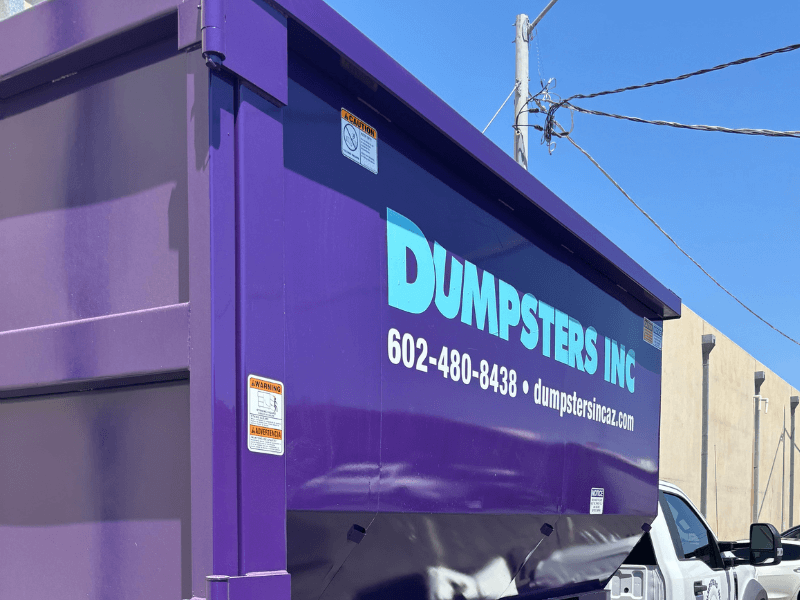
A roll off dumpster rental may make sense when debris accumulates over several days or repeated trips would interrupt work. It provides a collection point but not blanket permission to mix materials.
If most of the load is concrete, dirt, or rock, ask specifically about a container intended for heavy or inert material. If the project is mostly drywall, wood, and general demolition debris, ask about a mixed-construction container. Confirm acceptance in either case. Consider whether debris must be hauled all at once or collected as work proceeds. A short job producing one material may require a different arrangement from a multiweek remodel producing several changing waste streams. Ask for a plan that fits the sequence rather than renting solely because a large container sounds convenient.
Estimate Both Space and Weight
Dumpster size is commonly discussed in cubic yards, a measure of volume. That describes space, not weight. Dense debris requires checking the provider’s weight allowance and loading restrictions.
Estimate each material separately. Record concrete area and thickness or soil excavation dimensions, then ask the provider for a container recommendation. Do not guess at tonnage.
Also ask whether a concrete or inert container must remain a single-material load. Wood forms, roots, or drywall may require different handling. Separate them before loading.
A smaller container designed for dense material may be more appropriate than a larger general-purpose container. Choose by accepted materials and allowable weight. Ask how the load will be assessed at pickup and whether the provider needs a more accurate estimate before dispatching a truck. Also confirm whether the weight allowance is included in the quoted rental terms or assessed separately. The lowest initial quote for a container may not be the suitable one when weight drives the decision.
Questions to Ask a Dumpster Provider Before Booking
Buckeye homeowners comparing providers can start with the local Construction dumpster rental options offered by Zona Dumpster Rentals. Its Buckeye service page describes residential and construction rentals, including containers for heavy debris. Confirm terms for the actual project; sizes are not interchangeable.
Before scheduling delivery, ask the provider:
- Will this exact material mix be accepted? Describe concrete, soil, tile, drywall, vegetation, and anything else in the load. Ask which items need separate handling.
- Which container type and size fits the load? Discuss both estimated volume and weight, including whether a dedicated concrete or inert container is appropriate.
- What weight is included, and what happens if it is exceeded? Request a clear explanation of the applicable allowance, maximum load, and any additional charges.
- Where may the container be placed? Discuss driveway access, gates, overhead obstructions, the loading area, and any property or neighborhood restrictions that need attention.
- How do delivery, rental duration, and pickup work? Confirm the arrival window, how pickup is requested, and what happens if demolition finishes earlier or later than planned.
- What must be done before the truck returns? Ask about fill height, prohibited contents, clear access, and any preparation necessary for safe removal.
Record these answers in the rental terms and share them with anyone loading debris. Ask who to contact if unexpected materials appear behind a wall or under a slab. A brief call before adding those items can prevent a mixed load that no longer matches what was agreed.
Plan Placement and Pickup Around the Work
Choose the proposed placement area before arranging delivery. Aim for a spot that keeps debris out of walking routes while allowing truck access. Ask the provider to check uncertain clearances.
Match delivery to the work sequence: concrete removal may generate heavy debris immediately, while kitchen demolition produces different loads in stages. If stockpiling briefly, keep waste categories separate.
Zona Dumpster Rentals promotes same-day rental options, which may be helpful when a job begins unexpectedly. Availability and the appropriate container still need confirmation for the requested date and debris type. Do not skip material and weight checks. Also leave room in the schedule for the provider’s pickup process. A container that remains in the driveway after the work is finished may affect parking or the next phase of the remodel. Confirm the requested collection date instead of assuming removal happens automatically when workers leave.
Three Practical Buckeye Remodel Scenarios
Replacing a concrete walkway: The removed slab is heavy, and demolition may leave soil, edging, and wood forms alongside it. Do not put the concrete in a city cart. Ask about a dedicated heavy-material container, then confirm whether the other materials need their own disposal route. Give the provider slab measurements before selecting a size.
Updating a bathroom: The debris may include tile, drywall, a vanity, fixtures, and packaging. Make separate notes for reusable items and any products that require special handling. A mixed-construction container may be suitable for some of the remaining material, but confirmation matters more than the room’s square footage alone.
Removing a backyard feature: Excavation can produce a combination of dirt, gravel, broken pavers, wood, and plant material. A bagged pile is not automatically acceptable in municipal carts. Identify which portion is inert, which is vegetation, and which is general demolition waste before asking for container recommendations.
In each case, choose a collection method that accepts the actual material and quantity.
Make the Disposal Decision Before Demolition
For a Buckeye remodel, begin with the city’s cart guidance, then sort and estimate the debris. Check whether a suitable approved alternative exists for small, isolated items. If the project calls for an on-site container, confirm material acceptance, weight, location, and pickup arrangements before work begins. Plan waste removal before debris reaches the curb.
About Zona Dumpster Rentals
Zona Dumpster Rentals provides residential and construction dumpster rental services in Buckeye and other communities in the Phoenix area. Its published service information includes container options for general project debris and heavy materials, with same-day rental inquiries subject to availability. Homeowners can review its Google Business Profile or contact the company at (602) 292-9138 to discuss their project.