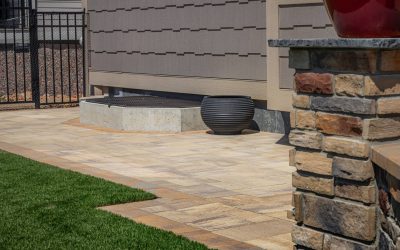
A home irrigation system should be planned around the final landscape layout, not added after the rest of the yard is complete. For Peoria homeowners, coordinating irrigation with planting areas, turf, hardscape, and other landscape features helps create a system that delivers water where it is needed without conflicting with the overall design.
New landscape projects provide an ideal opportunity to think about irrigation early. Because many irrigation components are installed underground, their placement can influence how efficiently the rest of the outdoor space comes together.
What Should Be Considered Before Irrigation Installation Begins?
Before irrigation installation starts, homeowners should first understand what the finished yard will include.
Different areas may have different watering needs. Turf may require one type of coverage, while trees, shrubs, or planting beds may need a different approach. The size of the property, sun exposure, landscape layout, and location of hardscape also affect how the system should be designed.
Planning these elements together helps determine where irrigation lines should run, how many watering zones may be needed, and which parts of the yard should be served independently.
The goal is to design the system around the completed landscape rather than trying to fit irrigation into spaces that have already been defined by other features.
Why Are Irrigation Zones Important in a Residential Landscape?
A residential irrigation system is often divided into zones because different parts of a yard rarely require identical watering.
For example, one section may contain turf while another contains trees or desert-adapted plants. If both areas operate on the same watering schedule, one zone may receive more water than necessary while the other receives too little.
Separate zones make it possible to control different parts of the landscape independently.
For Peoria properties, this can be particularly useful because Arizona landscapes often combine multiple materials and plant types within the same yard. Thoughtful zoning allows the landscape irrigation system to respond more accurately to those differences.
How Does Hardscape Affect Irrigation Layout?
Hardscape plays an important role in irrigation planning because permanent surfaces can limit where underground lines and irrigation components should be placed.
Patios, pathways, pavers, concrete areas, outdoor kitchens, and other structural features may occupy areas where irrigation lines could otherwise run. If irrigation and hardscape are designed separately, conflicts may arise during installation.
Planning both at the same time helps identify practical routes for underground piping before structural surfaces are installed.
It also helps reduce unnecessary water reaching areas such as patios or walkways. Sprinkler placement and other irrigation components can be positioned to serve landscape zones without directing water toward hardscape surfaces.
What Is the Role of an Automatic Irrigation System?
An automatic irrigation system uses a controller to operate different watering zones according to a programmed schedule.
This allows homeowners to manage irrigation without manually turning individual zones on and off each time water is needed. The controller can be configured according to the specific requirements of the landscape design.
For a newly installed Peoria yard, an Automatic Irrigation System can be incorporated into the larger landscape plan so that irrigation supports the placement of turf, planting areas, and other features from the beginning.
Automation is particularly useful when a property contains several distinct landscape zones that require different schedules.
How Should Irrigation Lines Be Positioned in a New Landscape?
Underground irrigation lines should be positioned based on the final layout of the yard.
The location of planting beds, turf, pathways, hardscape, and other permanent features should all be considered before trenches are created.
Lines should also be routed in a way that allows each irrigation zone to reach the intended area efficiently.
This is one reason irrigation planning should happen early during a full landscape installation. Once major structural features are in place, changing underground infrastructure can become more complicated.
By coordinating irrigation before those surfaces are completed, the system can be integrated more naturally into the overall project.
How Does a Landscape Irrigation System Support Full Landscape Installation?
A landscape irrigation system is one of the foundational components of a complete residential landscape.
It supports the living elements of the design while also influencing how underground infrastructure fits around hardscape and other installed features.
When irrigation is included in the larger landscape plan, homeowners can make decisions about watering zones, pipe routes, controller locations, turf areas, and planting zones at the same time.
This creates a more coordinated installation process and helps ensure that each part of the yard works with the others.
What Should Peoria Homeowners Discuss With a Landscape Contractor?
Before work begins, homeowners should ask how irrigation will be incorporated into the full landscape design.
Useful topics include the number of watering zones, the types of landscape areas being served, how irrigation lines will be routed around hardscape, and where controllers or valves will be placed.
Homeowners should also discuss future plans for the property. If additional outdoor features may be included as part of the current installation, those should be considered before the irrigation layout is finalized.
A landscape contractor can help evaluate how irrigation fits into the broader structure of the project rather than treating it as a standalone feature.
Why Is Early Irrigation Planning Important for Peoria Homes?
Early irrigation planning helps create a more organized landscape installation.
When the system is designed before hardscape and other permanent features are finalized, underground components can be positioned with fewer conflicts. Watering zones can also be tailored to the actual layout of the finished yard.
For Peoria homeowners, this approach is especially useful when planning a complete residential transformation involving irrigation, hardscape, turf, planting areas, and other landscape features.
A thoughtfully planned home irrigation system does more than deliver water. It becomes part of the overall landscape design, supporting the function and layout of the outdoor space from the ground up.