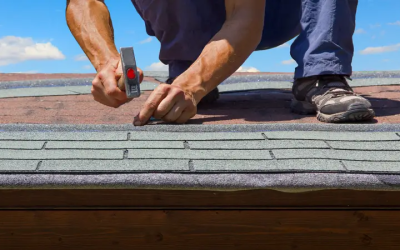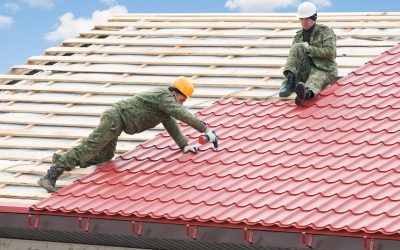
Whole-home termite treatment involves covering a house with large tarps to contain the treatment area. Although the process is intended to address pests inside the structure, preparing and securing the covering may bring workers, fabric, ropes, clips, and other equipment close to the roof.
Tile roofs require particular care during this work. Clay and concrete tiles are durable against many environmental conditions, but they can crack under concentrated weight or improper foot placement. Peoria homeowners planning termite tenting should understand how the process may interact with their roofing system.
Does Termite Tenting Directly Damage a Roof?
The treatment itself does not automatically damage roofing materials. Most concerns involve the physical process of placing, adjusting, securing, and removing the tent.
Large tarps must extend across the roof and down the exterior walls. Workers may need to reach roof edges, move across selected areas, or guide heavy sections of fabric over ridges and valleys. Equipment used to keep the covering in place can also come into contact with tiles, flashing, gutters, fascia, and other exterior components.
When handled carefully, termite tenting can be completed without noticeable roofing damage. The risk increases when the existing tiles are already cracked, loose, poorly supported, or especially fragile.
Why Are Tile Roofs Vulnerable to Foot Traffic?
Roof tiles are designed primarily to shed water and protect the layers beneath them. They are not intended to support weight equally across every part of their surface.
A person who steps in the wrong location may place pressure on an unsupported section of tile. This can produce an obvious break or a small fracture that remains difficult to see from the ground. Older tiles may be more vulnerable if prolonged exposure has made them brittle.
Workers familiar with tile roofs generally use specific walking paths and step where the tiles have stronger support. Even with proper care, limiting unnecessary roof traffic is one of the most effective ways to reduce the likelihood of damage.
How Can the Tarp Affect Tiles and Roof Edges?
Termite tents are large and may become heavy or difficult to position as they move across the roof. Dragging the material over raised tile edges can shift individual pieces or place stress on ridge and hip tiles.
The covering also needs to be secured around the lower perimeter of the home. Depending on the property, this may bring straps or fasteners near gutters, fascia boards, eaves, and tile edges. These components should not be treated as convenient anchor points unless the attachment method is appropriate for that specific area.
Care is also needed around skylights, vents, antennas, and other rooftop features. A tarp pulled tightly against a projection may place pressure on its flashing or surrounding tiles.
What Should Be Checked Before Tenting Begins?
A visual review before treatment can establish the roof’s existing condition. Homeowners can look from the ground for displaced tiles, broken edges, uneven rows, or pieces already resting in unusual positions.
Taking dated photographs can also help distinguish preexisting conditions from changes noticed after the work. Images should include the roof edges, ridges, valleys, areas around vents, and accessible views of each slope.
Homeowners should tell the termite treatment provider about known roof concerns before the tent is installed. If the roof has recently undergone roof repair or contains especially delicate tiles, that information can help the crew plan access more carefully.
Should Roofing Professionals Coordinate With the Treatment Crew?
Coordination may be helpful when the roof is older, has known vulnerabilities, or includes difficult access points. Professional roofers can identify areas where foot traffic should be limited and explain which parts of the system require extra care.
The termite treatment provider remains responsible for planning their own work. However, sharing information about the roofing system can reduce uncertainty. Homeowners can ask how the tent will be placed, whether workers expect to walk on the roof, and how the covering will be secured.
The discussion should happen before the treatment date. Waiting until the crew arrives may leave little time to modify access or equipment placement.
What Should Homeowners Examine After the Tent Is Removed?
Once treatment is complete, homeowners can compare the roof with their earlier photographs. Items worth noting include newly cracked tiles, shifted rows, displaced ridge pieces, bent flashing, damaged gutters, or debris left on the roof.
Interior areas can also be reviewed during the next rainfall. Water marks near exterior walls, vents, valleys, or ceiling transitions may indicate that a concealed layer needs attention. However, an interior mark does not necessarily identify the exact entry point because water can travel before becoming visible.
Homeowners should not climb onto a tile roof to conduct their own close inspection. Additional foot traffic can create the very damage they are trying to identify.
When Could More Extensive Roofing Work Be Needed?
A few damaged tiles may require limited attention when the surrounding system remains in suitable condition. More extensive work may be considered if tenting reveals widespread fragility, deteriorated underlayment, weakened battens, or previously concealed problems.
Termite treatment alone does not determine whether a roof replacement is necessary. That decision should be based on the condition of the complete residential roofing system rather than the presence of isolated surface damage.
A professional evaluation may distinguish between a broken tile, a displaced component, and a broader issue beneath the visible surface.
Protecting the Roof Through Advance Planning
Termite tenting and roofing serve different purposes, but they meet physically during a whole-home treatment. Thoughtful preparation can help protect roof tiles while allowing the pest-control work to proceed.
Documenting existing conditions, discussing access, limiting unnecessary foot traffic, and reviewing the roof afterward give Peoria homeowners a practical way to manage the process. These steps do not guarantee that every issue will be avoided, but they can make changes easier to identify and address appropriately.